Ekphrasis: Poet to Painter to Poet

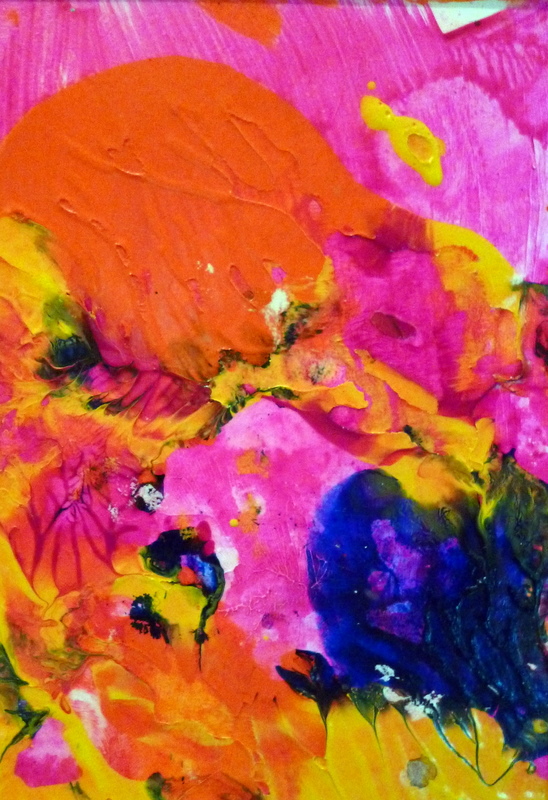
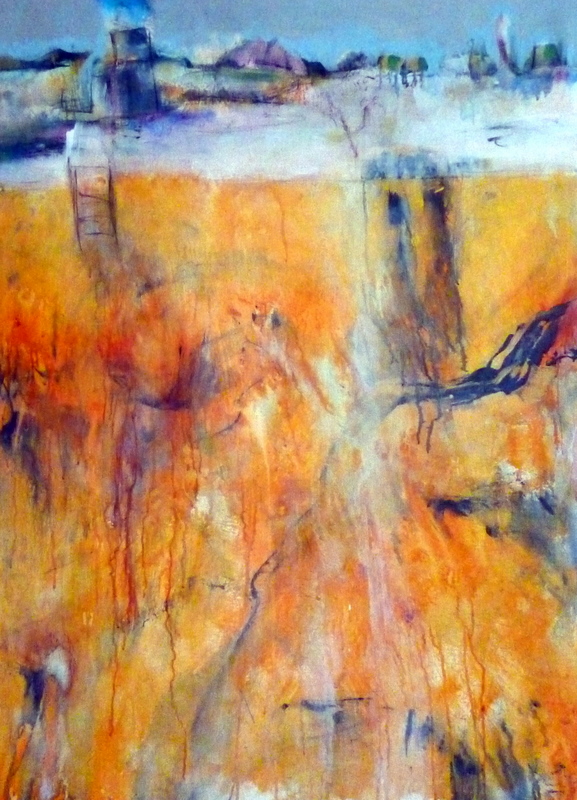
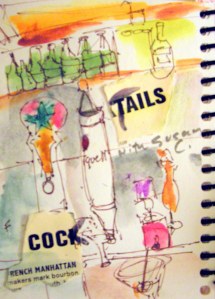
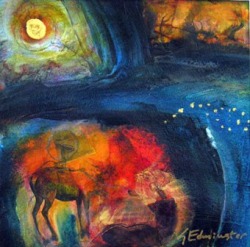
Suzanne Edminster, Poetry / Sally Baker, Painting

Yes, I practice Ekphrasis, and I’m proud of it. 

Now that I have your attention, I’ll put the definition of Ekphrasis is at the end of the post. I have a Master of Poetics from  New College of California in San Francisco.  I was lucky to study with  Robert Duncan and Diane di Prima, among others.  It wasn’t a creative writing course.  The poet-teachers had the vision of sharing their  vast source materials with students, not to coach them. Rather than giving us fishing poles to catch our own fish, they set us adrift on little paper rafts to encounter whales, and make of it what we could.

It was extreme:  Writers Write. Harsh.  Unlike most academic programs, the poets supported themselves primarily through writing, publishing, and performing, not teaching in the tenured shelter of a respectable university.  They lectured in old morgue rooms on Valencia Street  with smudgy green chalkboards and circular drains in the corners of the classroom floors, formerly used to collect embalming fluids. 

I remember being  terrified to expose my own beginner work to the mastery of the teachers.  In hindsight, I wasn’t that bad.  But many of us remained writing- paralyzed in the presence of genius, or perhaps it was just romantic depression endemic in the 80’s in the Mission District.

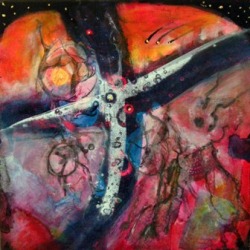
My poem was written in response to Sally Baker’s painting Persimmon with Attitude . My poem invokes Gary Snyder, another poet who wrote about persimmons.  Snyder references Mu Ch’i, a 12th century painter of pomegranates.  Poet to painter to poet to painter to….  Here is Mu Ch’i’s famous painting.

 Ekphrasis:Ekphrasis or ecphrasis is the graphic, often dramatic, description of a visual work of art. In ancient times it referred to a description of any thing, person, or experience. The word comes from the Greek ek and phrasis, ‘out’ and ‘speak’ respectively, verb ekphrazein, to proclaim or call an inanimate object by name.

You can hear me read my persimmon poem at 3:30 on Sunday, December 11, 2011 at Graton Gallery in “A Picture is Worth 500 words [or less]” with Sally Baker, guest artists Taylor Gutermute, Sandra Speidel, and Martha Wade.  There will be a good group of writers as well:  the writing was curated by Toni L. Wilkes, GregoryW. Randall, and Colleen Craig. I’ll write publish the poem in a future post, but it really belongs with the painting.  Ekphrasis to you, too.
Saltworkstudio Large Painting Class: 5 Clues, and Cool Painting Titles

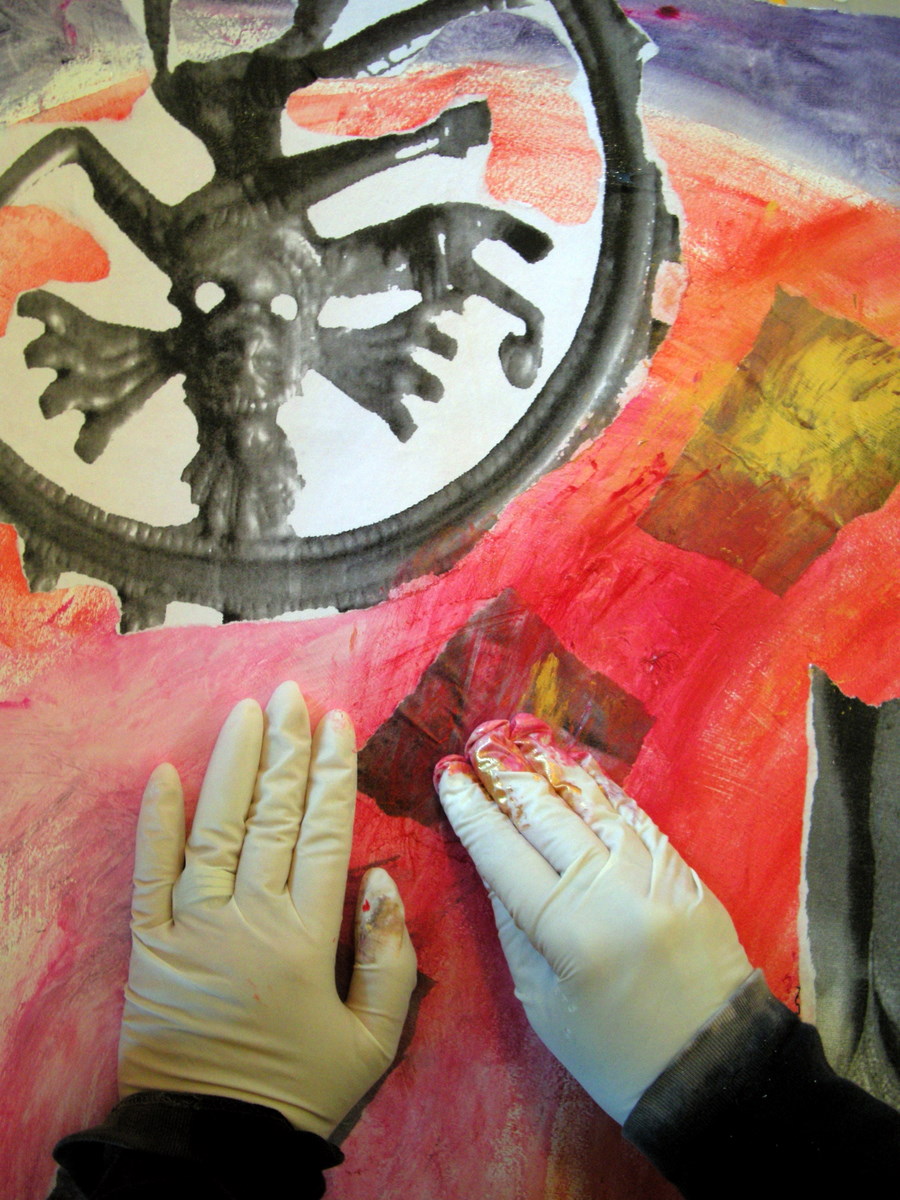
Cythia Heimowitz' s hands on her painting

What’s a large painting for you? 12  by 12 inches?  6 feet by 6 feet?  A mural? Anything on canvas? 

 What’s a large series?  Two paintings? A hundred?
 
In Sunday’s Saltworkstudio Paint Large class, our goal was to clarify our intentions for a series and begin to paint on larger surfaces.   For the purposes making headway in a four-hour class, I suggest students bring half to full sheets of watercolor paper, or three identical canvases up to 30 inches on a side.
 
I won’t share the entire process of the class, but it did result in the stunning headway on painting series you can see in the slideshow below.  All paintings shown were done in class on Sunday, and they are very fine starts. Some students came in with well-developed ideas, and some came in “blank.”
 
 I had to figure out how to model and convey my own process when working on a large series of big surfaces.    We used some of the  ideas below as guidelines.
 
  1. A large painting is not a small painting “blown up.”  Start fresh.  “Toto, I’ve a feeling we’re not in Kansas any more.”  You are in a new, large, foriegn country.  Explore it.
  2. Composition is critical.  Plan a minimal, flexible composition format or idea.  It could be “Golden Mean” or “Diagonal.”  OR it could be quirkier: “Large X-Ray Animal in the Middle”  or “Floaty Fractal Bubble with Connectors” or “One Line High Horizon.”  Vary each painting in  your series, but stay within one compositional “meme.”
  3. Texture your surface first, then put on large swathes of color or paint BEFORE “starting” the painting.  Keep it very loose at first.   You’re getting hold of your surface, getting acquainted with it…developing a relationship.  The start is like a first date.
  4. You need big ideas for large paintings.  Work in your notebook. Catch the ideas and desires that hang at the periphery of your conciousness. We’re like Adam naming the animals of our imagination into existence… and some of them are very odd creatures! Don’t be afraid of titling your paintings right at the start.  You can always change them later.
  5. Remember, it’s only paint and canvas.  Sure, you might fail.  So what?

Enjoy the slideshow!  The Mythic News and Studio News are after the slides. Students, please leave some comments about your process and your series concepts and names.  I’m amazed by your work.

This slideshow requires JavaScript.

 
Mythic News:  You can get great abstract painting titles from myths and legends.  I just bought the beautiful, witty book  American Indian Myths and Legends, selected and edited by Richard Erdoes and Alfonso Ortiz.  Here are some titles I’d love to use for abstract paintings: The Origin of Curing Ceremonies. The Well-Baked Man.  Blood Clot. Jicarilla Genesis. Emerging Into the Upper World.  Great Medicine Makes a Beautiful Country.  The Theft of Light.  A Trick of Moon.  And more.  At the end of his life, my father told me that my great-grandmother was Native American.  It was the skeleton in the closet and a family secret.   At last I had a context for my resonance with ancient art.  Is there a DNA for visual desire, the passions of the eyes?
 
Saltworkstudio News:  All my classes are full through March!  I’ll be posting the next Spontaneous Construction date and time in the new year.   
 

My Desert Vacation 2: Petroglyphs and Premonitions

Grey Magic, acrylic combined media on paper, 10" x 10", Suzanne Edminster

Premonitions, by definition, come first. But, like ancient oracles, you never know what they really mean until you get there.

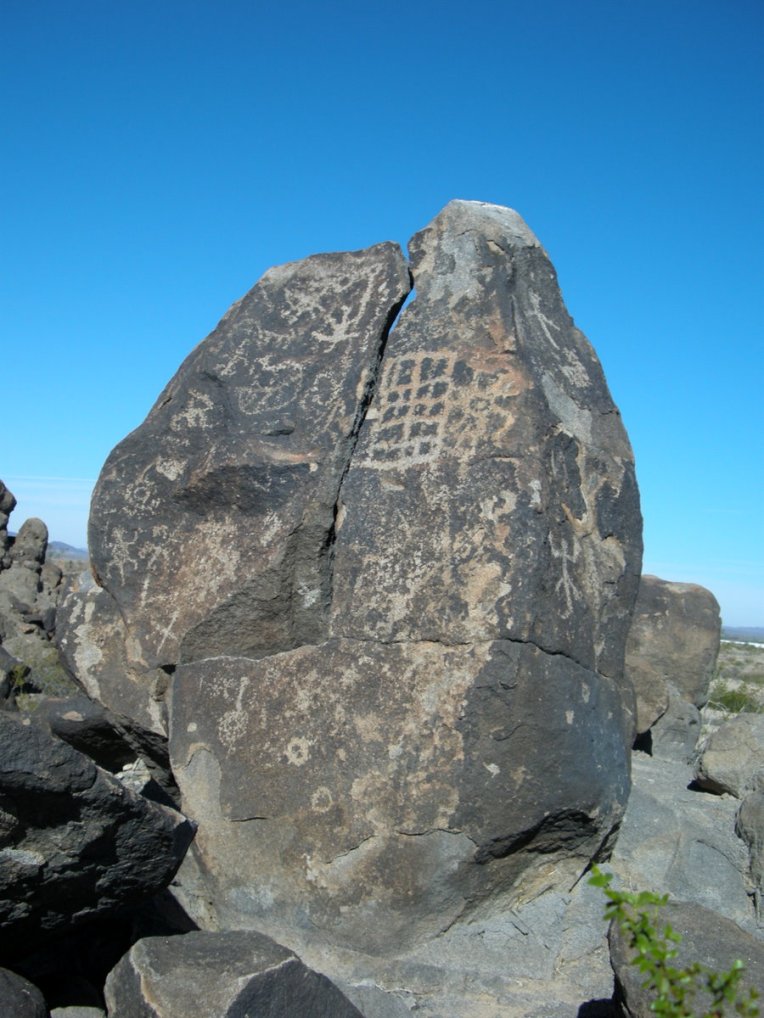
In hindsight, this little painting foretold our desert trip. I did this in October as a collage painting demo. Now it strikes me how much it is like the petroglyphs we saw at Painted Rock State Park, just outside of Gila Bend, Arizona, in late November. In fact, there’s a lizard spirit slithering gila-like through it.

Petroglyphs are the abstractions of the ancients. Were they a semi-precise writing or language, like heiroglyphs? Religious spirit encounters: “Hey, the Deer Dancer possessed me here!” Maps?

It’s interesting how there seems no real distinction between realism and abstraction in petroglyphs.  The deer with bulging belly seems so obviously pregnant, but the squared-off labyrinth delights  in the design-play of geometric abstraction.

Petroglyphs are vigorous and melancholy at once.  Here people met, prayed, danced, hunted, ate, and spent days and weeks creating with what they had– stone and imagination.

Boo!

My Desert Vacation 1: Angels in IHOP and Dead End Beauties

Angel of the Special, 5" x 7", Suzanne Edminster

How do we stay in touch with our art on the road? 

You don’t need to produce profound masterpieces, but it helps to ask the spirit that drives your art to go on the road with you: playfulness, or abstraction, or folk art, or even food.  It needs to be a break, so serious work should be avoided.

I took the Sprocket Rocket, but those old-style film photos will take a while to develop.   I enjoyed the play of my sketchbook… seed ideas seem to be what it’s about when you travel. It’s not good to be too ambitious, as anyone who has a pile of blank notebooks and sketchbooks lying around can tell you.

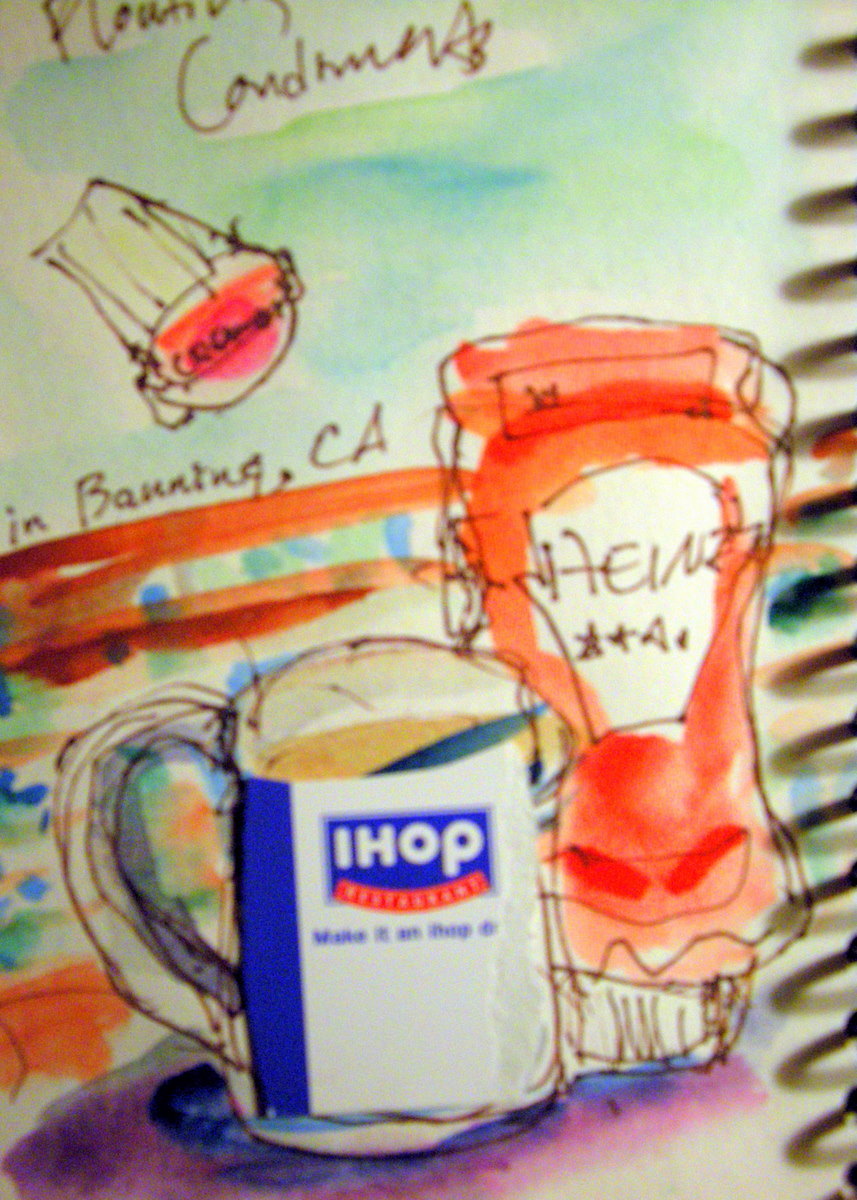
Floating Condiment

The “Angel of the Special”  in the IHOP picture was a statue across the highway that I could see from our booth.  The Floating Condiment was an extension of the notion of an angelic diner. Or maybe we had just been traveling too long, or had something funny in the syrup for the  Pumpkin Pancakes.  These little sketches, done in around 7 minutes each,  make me feel relaxed and at ease.  It seems to be important to paint them at the moment of making.  I never complete the ones where I say “later” to the color. 

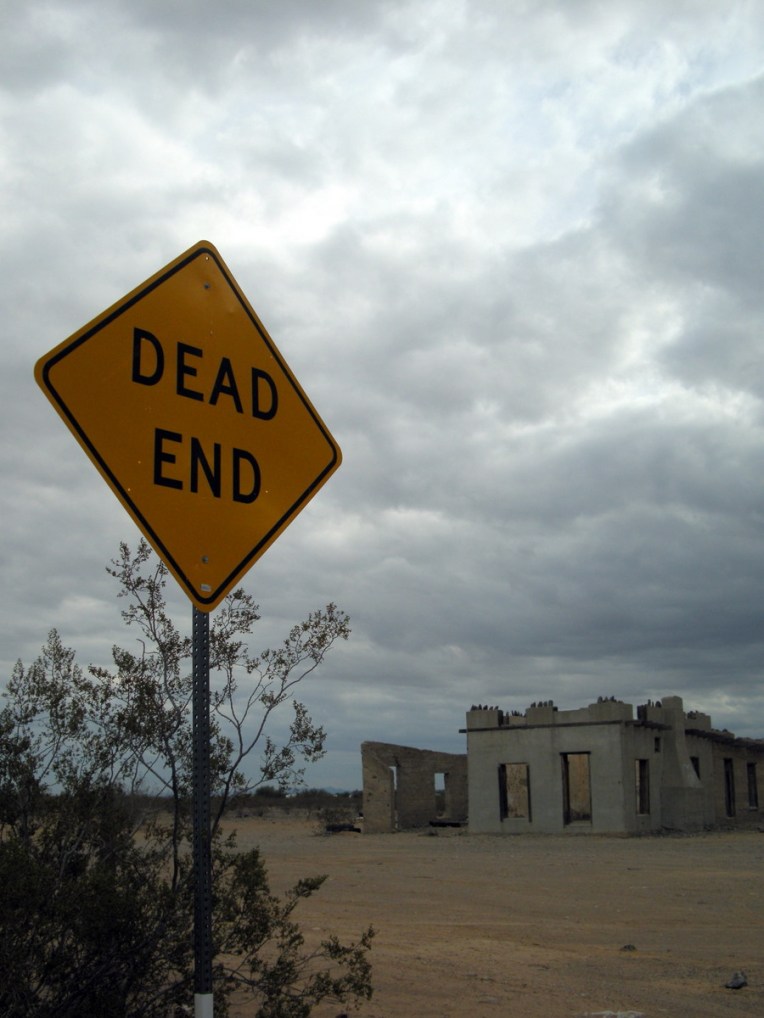
Beyond the End by Suzanne Edminster

The desert clears my head.  I like the monotony, and the inverted feeling of the landscape… with so little as a classical focal point, it practically begs for a kind of X-ray vision, an aboriginal approach.  I’ll write more on this in the next petroglyph post. The apparent “Dead Ends” of the desert lead to new perception.  Little or large things, sometimes quite alive, wiggle on up to communicate.

Daniel in the Lion's Den by Suzanne Edminster

I try to use the camera to record what I feel more than what I see.  These little arti-facts, the images, stir the pot.  We didn’t eat at Tonopah Joe’s after all.  We were invited to an impromptu, delicious potluck .  We ate in a reclaimed building near El Dorado Hot Springs with a fire outside and the stars really close. This beautiful meal, in the company of wanderers, was a real tribute to American hospitality.  We found  great Thanksgiving bounty, on the road and off; in the middle of desolation, a sudden bloom of fellowship.  For me, that’s the essence of the desert– a radical clarity of heart.

Mythic News: The Desert is the place where prophecies and prophets thrive.  Revelations abound, whether they come from an old desert hermit or a UFO visit.  Cowboy heroes themselves have a sort of monk-like quality.  First the White Hats fix the bad guys, then vanish, eaten by the endless horizon. The West is the place of death and sunset, and I did have the sense sometimes of crossing a great monotonous Purgatory.   But it is also the land where one can see forever.  Vision is both challenged and purified.   After all that, a cool beer tastes really good.

Thanksgiving Eye Candy for Your Virtual Feast

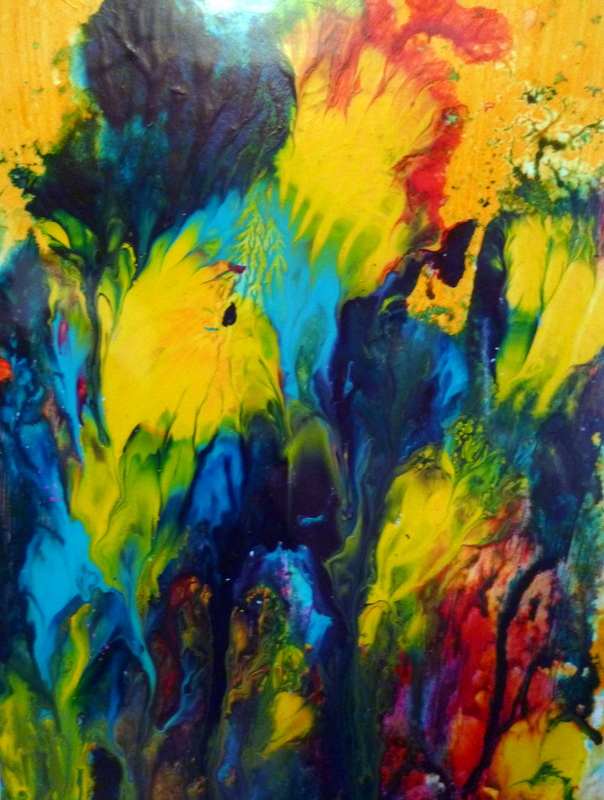
Sea Garden, acrylic on paper, 5" x 7", Suzanne Edminster

Dear reader, I wish you a delicious day.  I shall be dining in a truck stop in Arizona,  Tonopah Joe’s, made famous in the movie Alice’s Restaurant, with Scott, my husband, and other travellers.

Pure paint is so enticing. I put these on your eye’s table, for your enjoyment.  I make them by painting a bright background, then squeezing on globs of color.  Then I press another surface on top of it, peel it off, and let it dry.  They are deceptively simple;  most don’t work, but when they do,  you’ve just received a chocolate from the candy box of Fate.  Now that I’ve told you how easy they are, do you still respect me in the morning?

We can celebrate with words as well.  I offer you synonyms for  giving thanks, from the lumbering Thesaurus: praise, benediction, paean, grace, recognition, bless one’s stars (archaic, but beautifully true),  acknowledge, appreciate. My thanks to all of you who have invited my work and words into your in-box in the last few months. Sniff. 

Meadow, acrylic on paper, 5" x 7", Suzanne Edminster

Mythic news: The Cornucopia  was the horn of the goat that suckled Zeus.  It overflowed with inexhaustable food and drink. Everyone who’s anyone among the gods loves it. Fans of the Cornucopia include Demeter for the harvest of fruit and vegetables, Dionysios for the wine, Priapus for the sexy fun, Flora for the flowers, Earth, Autumn, Hospitality, Peace, and Concord.  May we all dine at this table!  Hear, here.

Studio news:  I’m traveling in Arizona this week with my Sprockett Rocket in my pocket!  What’s that, you say?  More soon, when the images are developed for your pleasure.  Yes, it’s real film.  Remember those days?  Please comment if you like something here.  I’ll respond as soon as I am back in civilization.

Over Underworld Vacations in Graton

Over Underworld, acrylic on canvas, 36 x 48, Suzanne Edminster

Over Underworld is going on a vacation in Graton.

This painting is part of a meditative abstract series on the links between worlds. I’ve always found it fascinating how much of our lives are lived in fantasy, dream, reading, and contemplation.  These are whole worlds that float beneath us. I wanted to paint the notion of a thin “skin” of organized thought, houses, civilization, geometry, over a beautiful chaos of creative form.  Ladders link the worlds, so, that with focus, we can climb up and down from one world to another… ladders without the chutes!

Painting process:   I established a horizon line for the three paintings, then started a gold and orange spatter process underneath, working on all three paintings simultaneously.  I tried various stages for the top.  You can see some of these in October Underworlds.  I opted to paint the whole thing rather than adding on the black and white paint compostions I had considered mounting.  Then I used areas of intereference paint mixed in with other paints over large areas of the painting, so that they would shift with the shifting light.

The Underwood, 5 x 7 watercolor collage sketch, Suzanne Edminster

I’ve spent little time in Graton, but the painting is currently on loan to Catherine Devriese and Isabelle Proust.  That’s mighty fine company, I would say.  And I did have a drink at the Underwood with Susan Cornelis last night, resulting in this immortal masterwork of a sketch.  Overworld, underworld, Underwood–  after my martini and some fun with Susan, watercolors, and ripping up the Underwood menu to collage, the horizons between them seemed to become , delightfully, more permeable.

Tell me, what lies Under your Overworld?

Mythic News:  I’m going to Rome this Christmas, and had forgotton that in one version of the Trojan myth,  the last of the remaining Trojans fled to found Rome.  I don’t know how this fits in with Romulus, Remus, and the Wolf Mom, though.  I’ve been feeding my soul with the classical warrior heroes, and only periodically get patriarchal indigestion.

Studio News: my new weekend workshop is called Spontaneous Construction and will be offered in the spring.  More soon.

5 Tips for Painting with Collage

What’s collage painting, mixed media painting, or combined media painting? How does it differ from collage? 

How can you use collage elements in painting without being highjacked or overwhelmed by the collage image?

Here’s a simple rule of thumb: A collage painting is more paint than collage elements.  The paint is 60% or more of the painting.  The collaged parts merge and meld seamlessly into the whole. 

 How to do it? Here are 5 tips. All paintings shown here are acrylic paint on paper or canvas.  I affix collage pieces to the surface with glossy acrylic gel medium.

1. Use only your own images whenever possible, including photographs, text, and your own sketches and handwriting.  You can also use copyright-free black and white images.  Copy and recopy the same  images in larger and smaller sizes at a copy store or using a laser printer.  Black and white is easier to incorporate, and leaves the color elements to the painter and paints.  I prefer to avoid colored magazine images, as tempting as they are.  The more you play with a single image by altering size, color, dimension, the more freedom you will gain  in painting.  You’ll own the image, rather than the image “owning” you.

2. Choose a theme. I used non-copyrighted Dover deer. Avoid themes that are intensely personal, like pictures of your dog, your mom, or your child.  You need to have a bit of distance to use images effectively, or to rip one up.  Eventually you’ll develop image banks of differing themes that become your private visual language.  

3. Paint first.  Put color on the surface, or paint a very sketchy painting, then affix images, then paint some more.  Painting first, before applying images, establishes that it is more a painting than a collage.  For all of these I chose a crucifix composition and applied paint first.  Then I put down ripped black and white collage images.  A warm background is good, as it can glow up through layers of paint.

4.Be willing to sacrifice the image.  Let go of the image you love and let it disappear, if the painting demands it. Show only a part of it.  If you want to keep it perfect, do regular collage, not collage painting.  This is one of the hardest parts of using collage elements in paintings.

5. Cover your images with glossy gel medium or UVLS varnish as you apply them.  Then you can pile on coats of paint and still wipe back to find them.

Toss the collage boxes and go back to only a few images.  Use them  thoughtfully in series of paintings. And have fun! 

Please use the comment section for questions on the collages or techniques.  I’m happy to share what I know.  If you’re one of my student who gets the blog, please share something about your experience with collage painting.

Mythic news:   Deer are symbols of sacrifice and purity, often used in Christian iconography.  It was said that deer gathered at the foot of the cross where Jesus hung.  I used them here  in these three works floating up and down through a penetrable horizon of birth and death, ancestor souls.  Collage itself belongs to the realm of Kali: dismembering  of paper , appropriation of image, rebirth of pieces into a new whole.  The goddess of Necessity wields the scissors and snips the thread of life– or the image.

The Cave Painters Were Really Pretty Good Artists, for Cave Men!

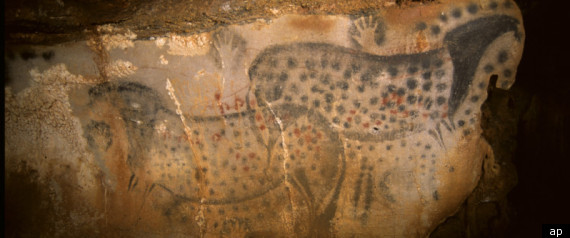
Spotted horses probably existed way back then, says a new genetic report.  This means that the cave painters weren’t just having a great time making a cool, fun, repetitive dot pattern on their creations, but were somehow representing AN ACTUAL HORSE.  DNA now proves that the cave painters were “good.”  Good means realistic in painting.  We wouldn’t want cave painters painting their dreams, now would we?

I salute  the writer,  Alicia Chang,  for pursuing this connection. And the article in the NY times is more fleshed out… or more boned out, because that’s where they got the DNA.   But these articles proceed from a  number of assumptions that make me a bit crazy.  Here’s a list. Ancient artists couldn’t paint realistically.  Ancient artists make “primitive” art.  Ancient artists just sorta prayed to animals or grooved on them but didn’t observe them.  Ancient artists didn’t really know about paint application, media, and drawing.  Ancient artists weren’t da Vinci, or even Dali (who is actually a super-realist using the images in a surreal way).

In fact, recent research strongly implies that ancient people observed the animals so closely that they recorded the small changes in appearance and behavior in different seasons and during mating times.  They applied paint with brushes, air, organic materials like moss or hide, and fingers. They always used as many colors as they could, including greens and purples.  They used lamps and scaffolding to paint in high places.  And as Werner Herzog’s new film Cave of Forgotton Dreams  shows,  they clearly used the three-dimensional stone as part of their media, as well as animation techniques and a convention called “twisted perspective.”  Which I love, because it’s twisted. 

But the thinking remains either/or.   Was it realism or surrealism?  Science or art?    Why not both?

  And now I have  an excuse to put in my favorite little spotted horse, the Dawn Horse from my dad’s 1963 high school science textbook.  I also found newly released Lascaux cave photos from the 1940’s in this amazing Life photo essay.  I adore Lascaux with all my stone-and-iron-oxide  heart.

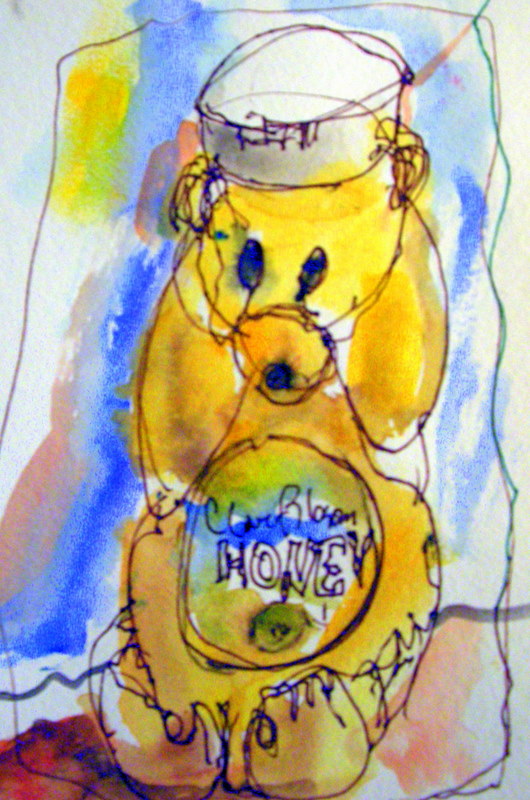
 I did a little Honey Bear sketch of  to honor Hezog’s cave bears, whose skulls decorate the floors of Chauvet .  My father, Bob Edminster, who passed away this year, loved  honey and told a mean Eeeeeeyow Bear bedtime story.  This picture is for you, Werner Herzog and Bob Edminster.

  Mythic News:  Hey, it’s 11-11-11! I give you here a link to my favorite visionary, Caroline Casey, who talks about eleven, and de-apocolizes the day.  Eleven is a threshold number: go ahead and step over.

Studio news:  the divine Laura Hoffman, along with her ladies, women, folk-art motifs, resins, and power tools– yeah, baby– will be our guest artist on the blog next week.  Don’t forget the A Street Studio’s innocent-yet-decadent Winterblast! Tomorrow!

A special thanks to Susan Cornelis, who has been encouraging me to sketch and shared her super-secret material list with me.  See her wonderful travel sketchbook-collage techniques here.

Ira Glass, Semiotics, Studios, and Salamanders

Salamander Winter, acrylic combined media on Fabriano paper, 23″ x 23″, Suzanne Edminster

Last night I closed my open studio after an impromptu party with three muses , one rather hairy, in which the absinthe bottle of La Muse Verte was emptied. Scott, Ed, and I ended up at the Ira Glass show at the Santa Rosa Wells Fargo Center.   Ira Glass, a semiotics major made good as creator and host of NPR’s This American Life, spent a long time giving out his trade secrets of storytelling, or story cultivating, or story minding, or whatever it is he does so well. 

I felt like I was watching– or rather, hearing, as the show celebrated the audial life of the radio–  an alchemist giving out his “secret”  recipes for turning lead into gold.  Open secrets: everyone can hear them, but only a few can use them. Storytelling, he said, is a semiotic pattern. One thing happens, then another thing happens, then another thing– an Ariadne’s thread out of the labyrinth– and it doesn’t matter a bit what the story is or who’s telling it. At the end there’s a bump, a pause, and a moral.   The elements of the story are the abstract bones.  If the substructure is strong, any story propels us into the other world.  Anyone and anything might work in these stories.  And you can tell thousands of them, like ScheherazadeOr Ira Glass.

This reminded me of abstract painting.  We move away from the subject, and into bones of pure visual  action.  The structure of the painting carries us along even without subject matter or explanation.  First one painting element happens, then another, then another….  it’s fashionable to avoid the word “narrative” with abstract or non-objective painting.  But there’s a story embedded in every piece, if we know how to read it.  The composition rocks and rockets us toward meaning.  

Glass paced the stage, IPAD in hand glowing like magic tablet of a new Moses, as he expounded on the world’s oldest art form, storytelling. In the story of the painting Salamander Winter, you may find Scott building salamander “houses” in our back yard.  We lay down boards on the damp winter ground on purpose to be salamander homes.  You can find two kinds of California salamanders in our yard, little wormlike Slender Salamanders and classically newty Arboreals.  We encourage them to raise their tiny, slimy, cute babies there, and we lift the  check their progress.  We identified them through this wonderful site, Identifying California Salamanders.

I'm Branka's painting now

My Ariadne’s thread is tangling here, so I have to quit. The Open Studios went well. Paintings bumped their way to new homes:  I’ve posted one here.  My thanks to all who visited and to my collectors.  The semiotic form of the blog requires that I ask you a question or two, to encourage socializing.  So I have some:  did you like my studio? huh? huh?  and, hey, did I invent the worst blog title ever, or not?  And the moral: Know Thy Salamanders.  Do you?

Mythic News:  Theseus dumped Ariadne after she saved his sorry self from the Minotaur, but a god (Dionysius)  ended up marrying her, so it all worked out.  She traded up.   The Alchemical Salamanders in my painting go through fire unscathed, faith enduring after earthly passions smolder.

Studio news:  the Open Studios were successful.  The Barracks Artists, in the old Finley Barracks in Santa Rosa, are emerging from the mist.  Guerilla artists in the mist.  Come visit me by appointment.