Mirror Neurons and Painting Neurons: Reflections on Four Hands Painting

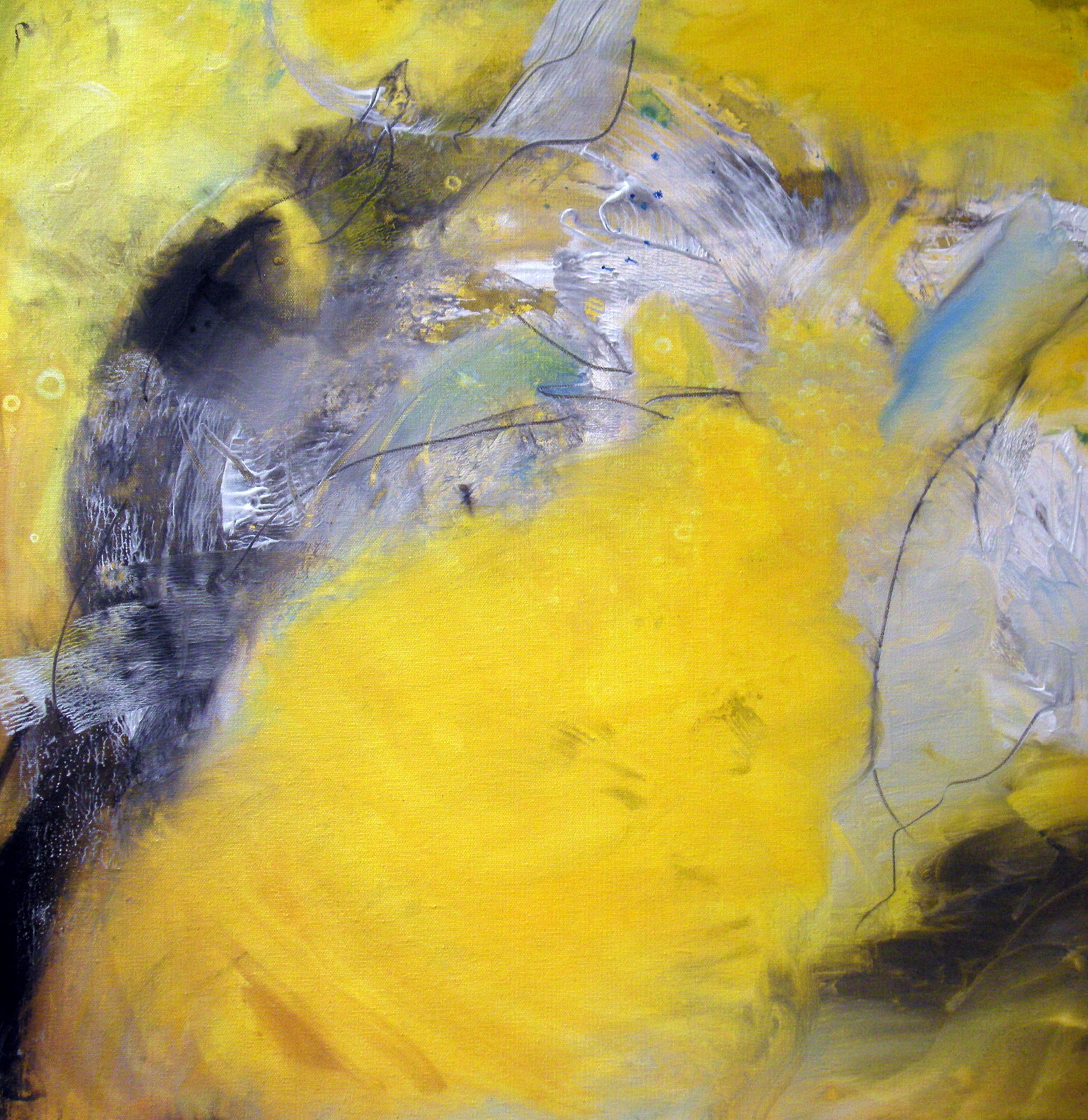
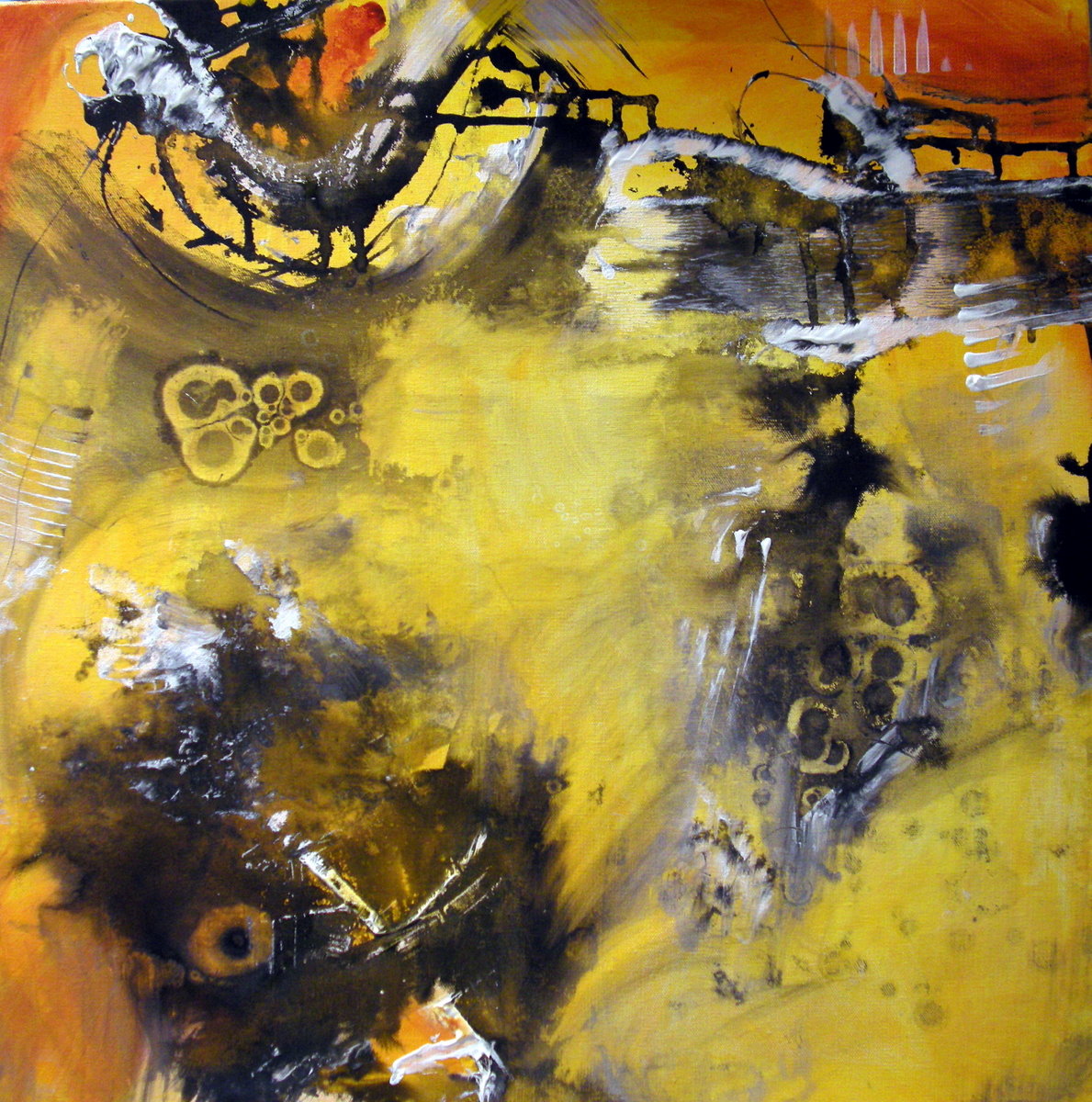
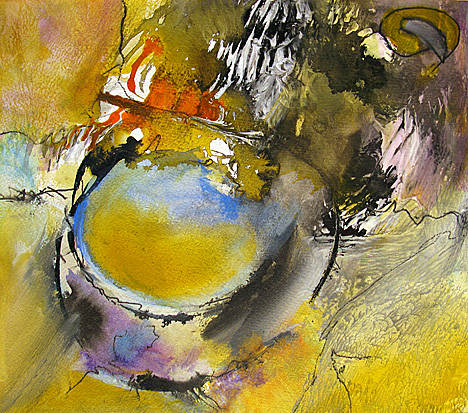
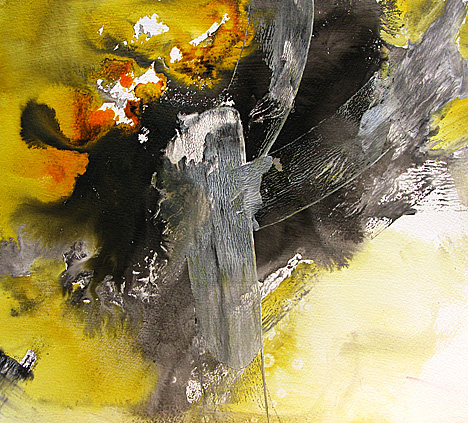
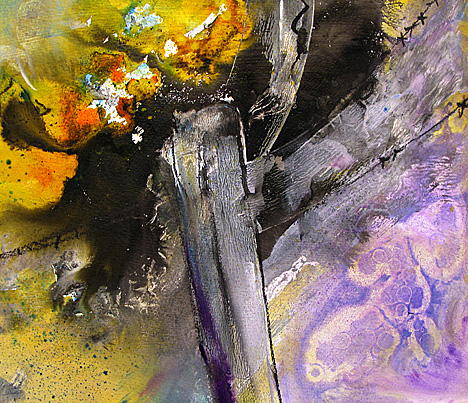
Four Elements, 36" x 36", by Susan Cornelis and Suzanne Edminster

Susan Cornelis and I have been passing paintings back and forth in our collaboration, getting our mirror neurons working. “Mirror neurons” are really highly speculative, as far as hard science goes, but are a seductive concept. We are made to imitate and to share knowledge, to mimic. Our brains recreate what we see as our own experience. When we see someone pick up a lemon, our taste buds start. In our case, we have at times in the collaboration consciously tried to mimic the other: to use a Suzanne color or make a Susan shape. Some of these paintings are turning out to be the “best” ones.

It makes me wonder if paintings– and all art– actually encode the experience of the painter, or, in our case, painters plural, into the paint itself. When we look at the Mona Lisa, do we start to resonate with da Vinci’s beautiful brain? He wrote all his notes in mirror writing, so maybe he cracked the code centuries ago, as he did with flying machines and submarines. Why are some of the collaborative paintings powerful? Here’s a question for the ego to gnaw on, and one we’ve discussed. Are the collaborative paintings “better” than our individual ones?

You can come to our show and find out. The painting shown here, “Four Elements”, is a good mirror painting example: Suzanne paints with Susan’s cool palette, Susan tries Suzanne’s odd forms.  Let us know what  you see in this work.

Italy Travel Sketchbook “Flow Charts” and Doodles

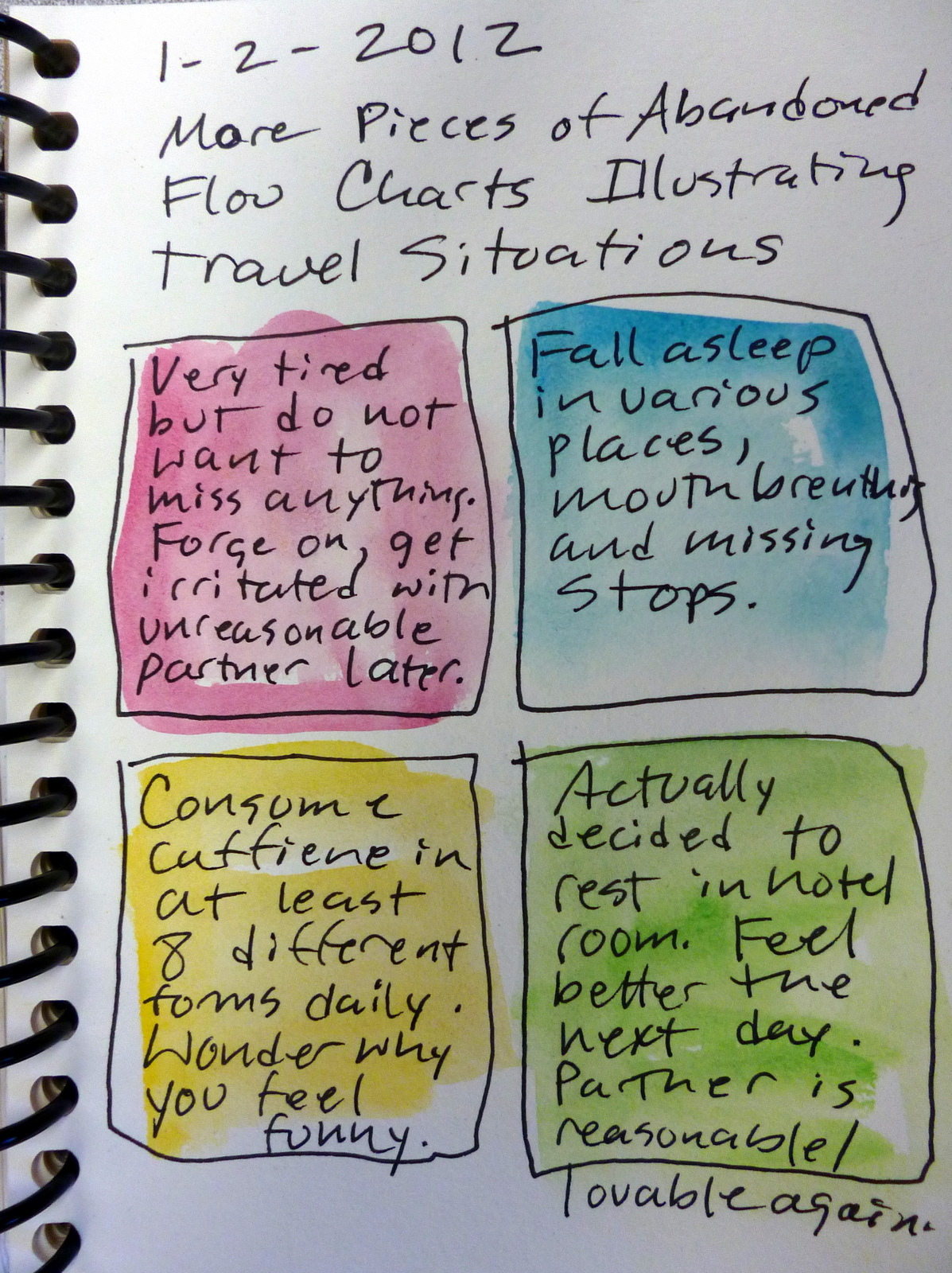
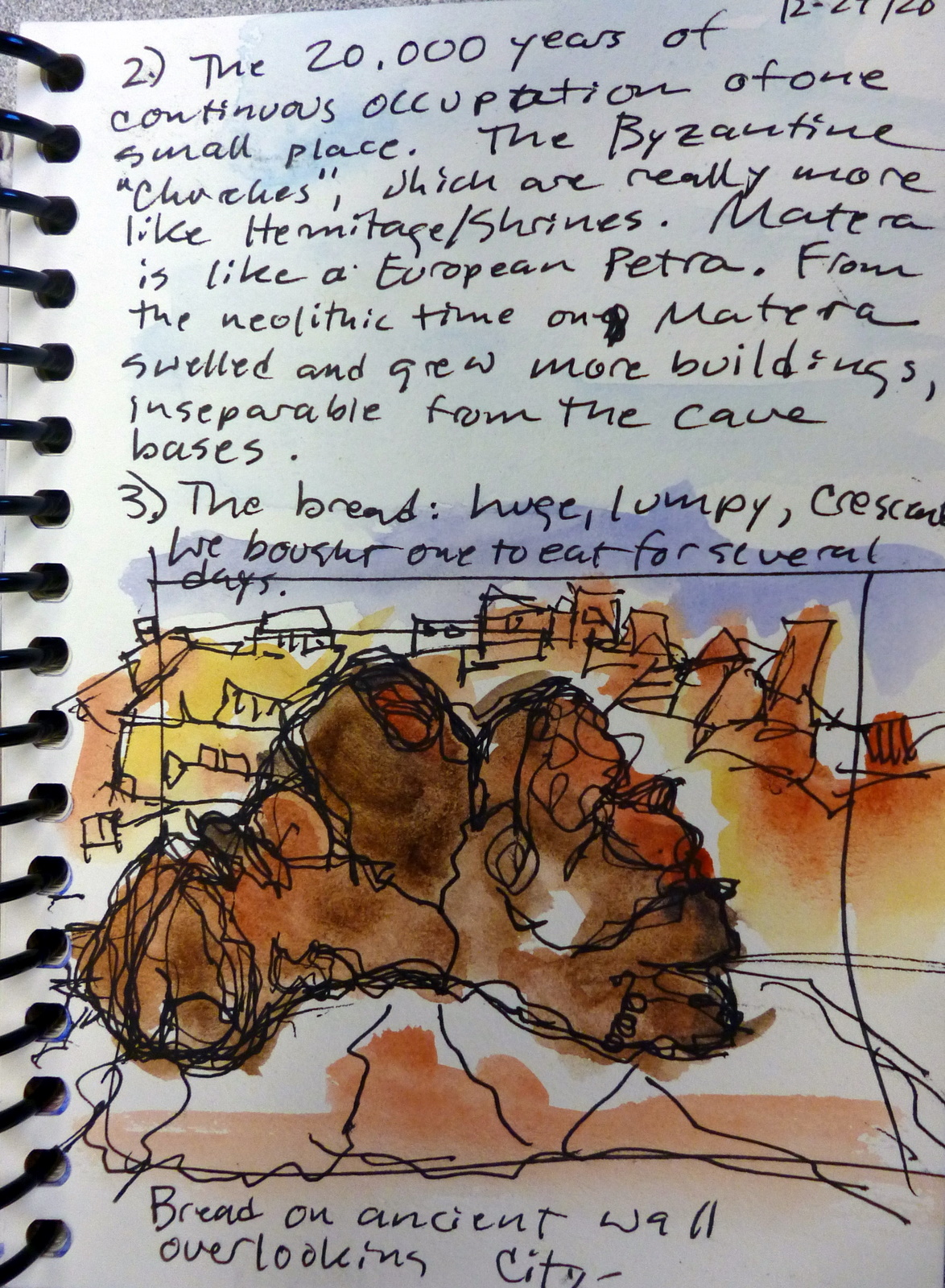
Scott and I kept a 5″ x 8″  travel notebook in Italy. We worked it almost daily as we traveled, finding time in cafes or on benches. But we had the most fun with Travel Flow Charts, illustrating certain common travel situations. The first one concerns travel with a partner.

It’s amazing how the other person becomes reasonable, and sulking silence vanishes. The next two charts are pieces we tried to fit in to a larger diagram, but couldn’t. They’re self explanatory.
I know some of you out there have subsisted on strange food during gaps in travel. Scott sucked on hard barley balls while walking around Annapurna. Crackers, the new hard tack.  And now on to address exhaustion:

We didn’t spend all our time making charts.

Here’s an Etruscan boar I drew in the Villa Giulia in Rome. I named him Oinkos.
We did get analytical with this Venn diagram. We wanted to do as many things as possible that we couldn’t do at home, and to appreciate the strange world in front of us, like live eels.
But is it art? Probably not, but is certainly is travel.

Four Hands Collaboration: The Paintings Here No Longer Exist

These paintings no longer exist. In our Four Hands project, Susan Cornelis and I live in a world of vanishing images. This is true of all painters, of course, but I have the feeling that the collaboration magnifies the process. The painting can change radically at any time. We can now note and record the changes as their own event; this is also part of our collaborative process.

Carpe diem! Seize the day, the moment, the painting as it exists exactly now.

The Opening Reception for the Four Hands Painting Collaboration will be held on Saturday, March 10, 2012 at the Phantom IV Gallery in Windsor, California.   Join us to see the latest versions of these shape-shifters.


Pompeii Winter Day with Toy Cameras


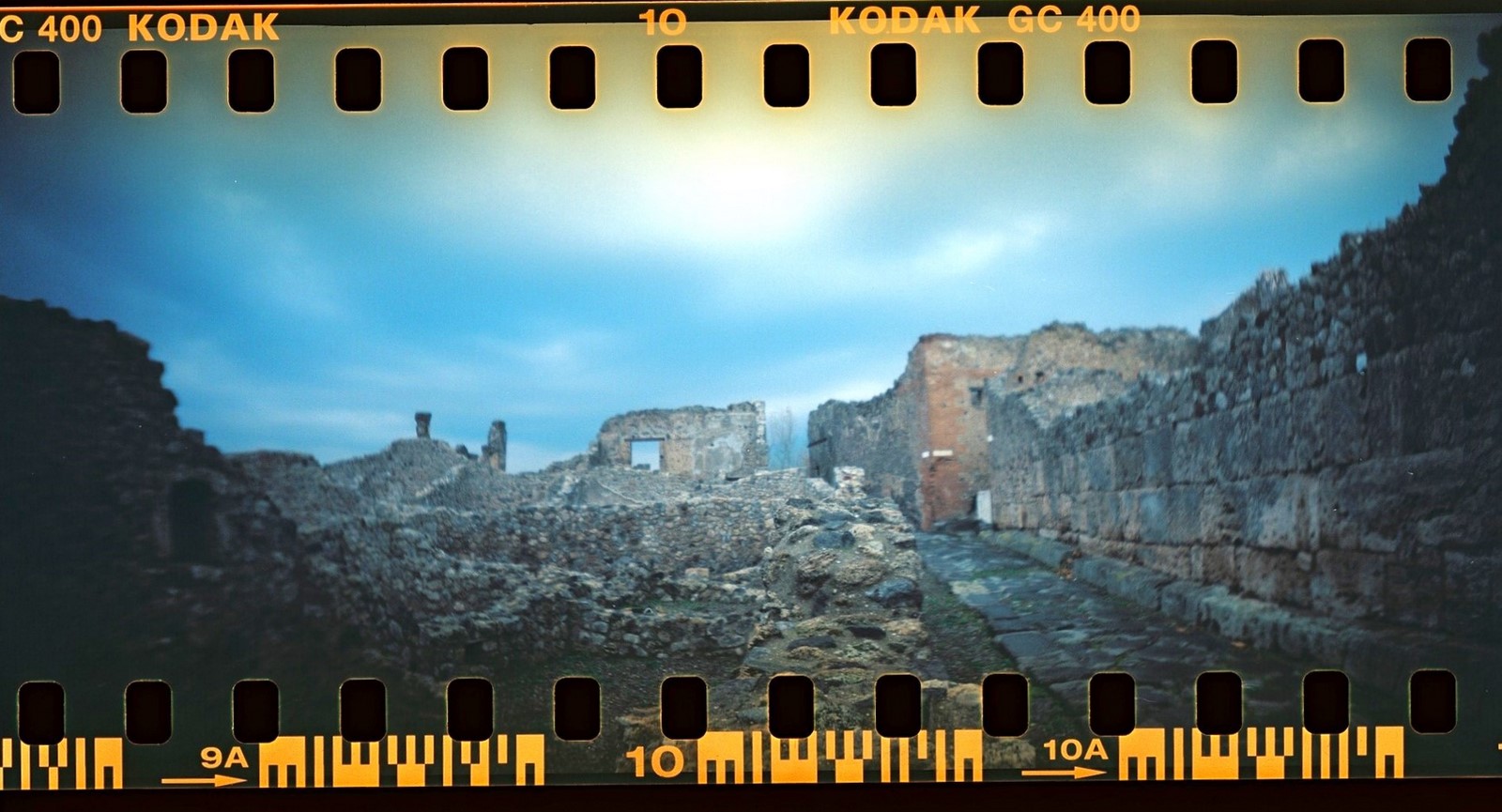
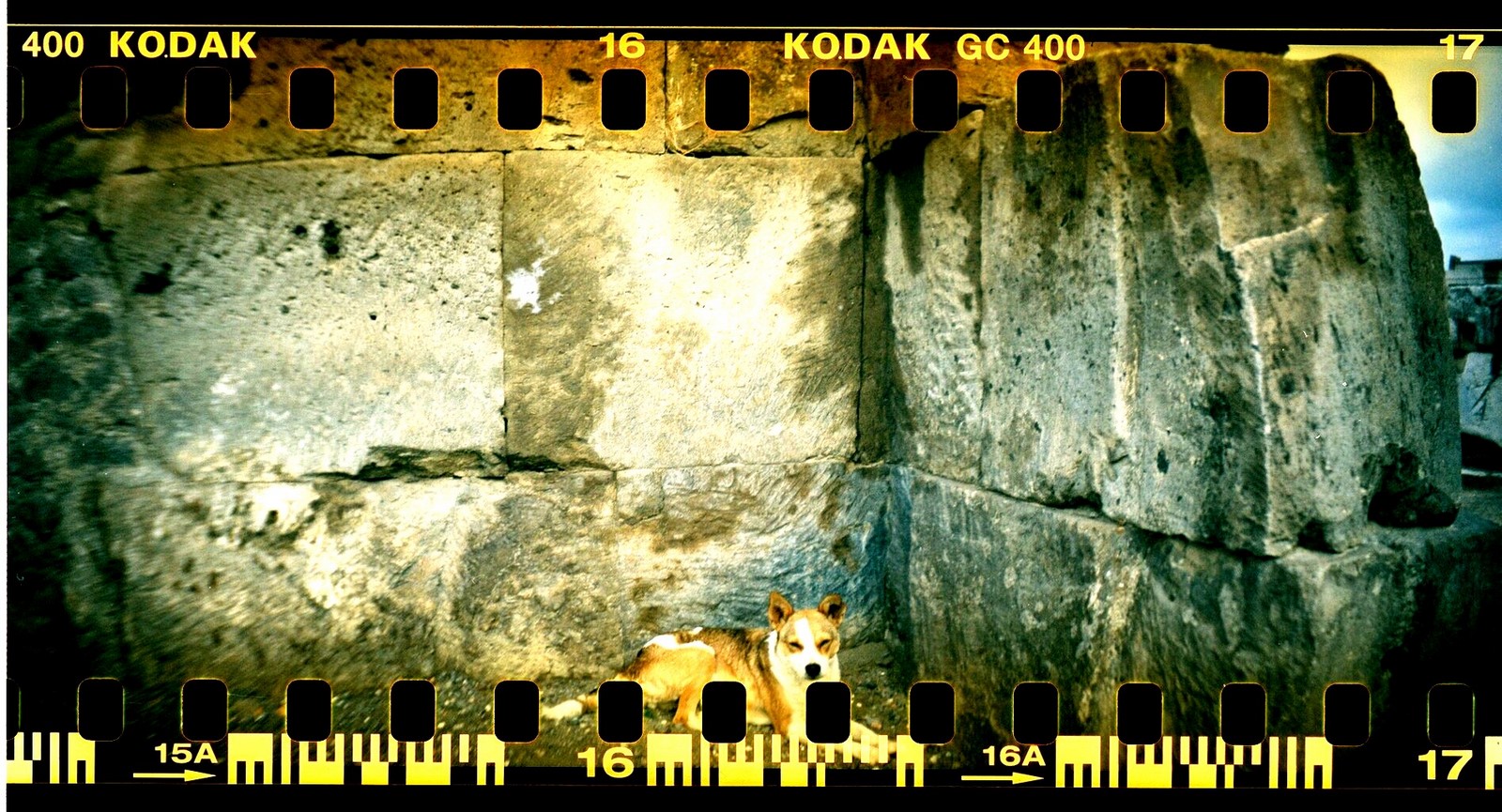
Pompeii, December. We stepped off the train from Naples into the first rain of the season, Vesuvius wreathed in fog. The ancient wagon ruts filled with water, but we could still use the stepping stones in place for two thousand years. It’s a large city, a grid of named streets, fast food counters, offices, fountains, floors, stores, a harbor, rich and poor homes, bread ovens, baths. Interrupted business is everywhere evident… those businesslike Romans! Wild dogs slept sadly on the cold stones. We bargained for a 10-euro umbrella for two. The rain worked to our advantage; we had a lot of the site to ourselves. It was a day for ghosts and images brought in on rainclouds and reflected in puddles. Pompeii!

Myth Notes:  Pompeii is  a web of Greco-Roman mythology, with a dash of Isis from newly-conquered Egypt.  It was wine country (Dionysius/Baccus/Silenus) and was on the coast (Posiedon/Neptune).  I think the Romans would have been appalled at how we got so much information on Roman culture from Pompeii; it was a hick commercial village far from the centers of power in Herculaneum and Rome.

Studio notes:  I’ve done Holga, Lomo, and pinhole toy photography for many years.  We chose to take the Lomo Fisheye and Lomo Sprocket Rocket with us, as they used 35mm film rather than the more awkward– but more fun– 120 mm film.  At airports now , many security guys have never even seen film.  I hand-carried it in a ziploc bag without film containers.  It always caused consternation and dismay in the security lines.  What the heck is film?

Lomo Sprocket Rocket Camera
Lomo Fisheye Camera

Picasso, Braque, Susan, Suzanne, and the “Squirrel”

Painting Start by SE / Cornelis Edminster Collaboration

Our painting collaboration (Susan Cornelis and Suzanne Edminster)  is finding squirrels,  squawking bird things, skulls, and stubborn winged beings  in  our  paint .  Are they vermin or rare species?  Should they  be conserved or eliminated?  Here’s a wild start on a 24″ x 24″ canvas.  These starts are ephemeral: this one no longer exists, but has already changed.   Check the left corner.

Karina Nishi Marcus told me about Braque, Picasso, and the  Squirrel.  Picasso found a squirrel form in the middle of one of Braque’s paintings, and Braque struggled for 8 days trying to get rid of it.  I’ve included the story in a link below. It’s interesting that Picasso told Braque to kill it, get rid of it.  Braque’s squirrel was living in a painting of tobacco, pipes, cafe glasses.  Picasso said the squirrel didn’t belong there. On the other hand, Picasso, with his autocratic personality, might not have  ever allowed something to appear in his painting that he didn’t plan, sanction, or control.  

Our wild things emerge from splashes, spatters, and a short discussion of media and possible compositional forms.  Keep them and develop them?  Paint them out?  What about this fellow?

Detail, Upper Left Corner, "The Bird"

He absolutely hijacks the whole composition.  Paint him out in favor of more balance and harmony?  Here’s a detail of what we did to the painting.  The “squirrel”– the bird in the corner– is still there.

Detail, stages 2 and 3, of painting start Cornelis Edminster Collaboration

A lot of you are painters out there.  What do you think?  Thumbs up or thumbs down to the Bird Thing?

Mythic notes:  Read the full story of the Picasso, Braque and the squirrel .   These painting apparitions belong to either the world of projection and psychology, or the world of the dream.  Painting is dreaming out loud, lucid dreaming.  Change the dream?  Is it nonsense or an omen?  Do we let it pass like a cloud, and onto the next dream, or painting?  See more of our painting day from Susan Cornelis’ point of view.

Studio news:  Karina Nishi Marcus is having an opening at the Wine Emporium in Sebastopol this Friday.  Come and enjoy her masterful work. 

Artist’s reception for
Karina Nishi Marcus
Friday, February 10, 2012 from 5-8 pm at “The Wine Emporium.”125 N. Main St. · Sebastopol CA 95472
Phone: 707-823-5200 
 
http://www.the-wine-emporium.com/calendar/event?eventid=11995

Plan to meet the artist and enjoy excellent food, wine and music!The Wine Emporium is located at 125 North Main Street, in Sebastopol, a few doors North of Hwy. 12. Karina Nishi Marcus’ paintings can be seen on the sets of major motion pictures and TV shows including, Mad Men, NCIS, Parenthood, CSI: NY, Monk and House.

A Quick Peek at a Painting Collaboration Process

Ever had one of those brilliant midnight ideas and let it drift away?  Well, painter Susan Cornelis  had one and made it a reality, that rare bird,  a painting collaboration. Encouraged by B.L.T., the collaborative project of Lisa Beerntsen, Tony Spiers, and Bob Stang, Susan asked me to be her partner in an a collaborative painting series with abstracted themes.

We began on Saturday in Susan’s studio.  Making it up as we went along, we decided to start with smaller paper pieces to get a feel for a larger series on canvas.  Here’s a start by Susan Cornelis:

Susan Cornelis Gold Start 6

As you can see, the starts were so beautiful it felt very risky presuming to “finish” them!  I “finished” the start you see above  with this version below.

Suzanne Edminster Gold Finish 6

 Here’s  another one of Susan’s brilliant starts:

Susan Cornelis Gold Start 4

 And my finish below:

Suzanne Edminster Gold Finish 4

A secret: this kind of painting is addicting, riveting, and fun.  To see more of the project, including a few of my starts and Susan’s finishes, visit Susan’s blog, Conversations with the Muse.   Cooperators are standing by, so more to come.

Happy Couples and Girls with Horns: Archaic Art Friends from Rome and Naples

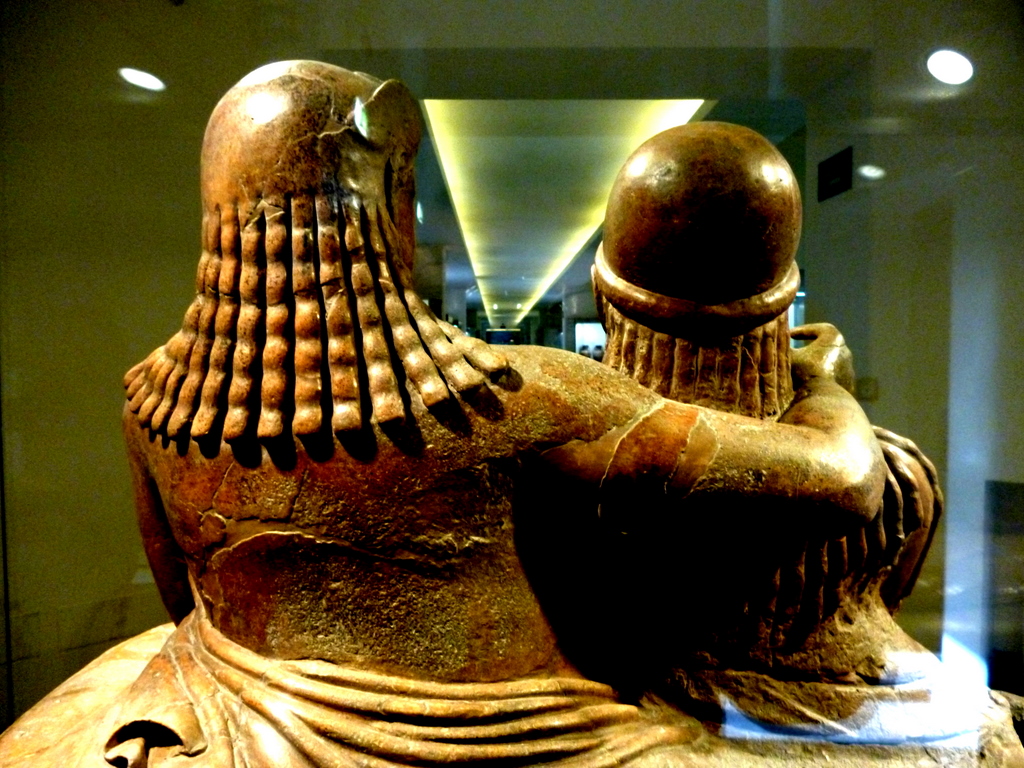
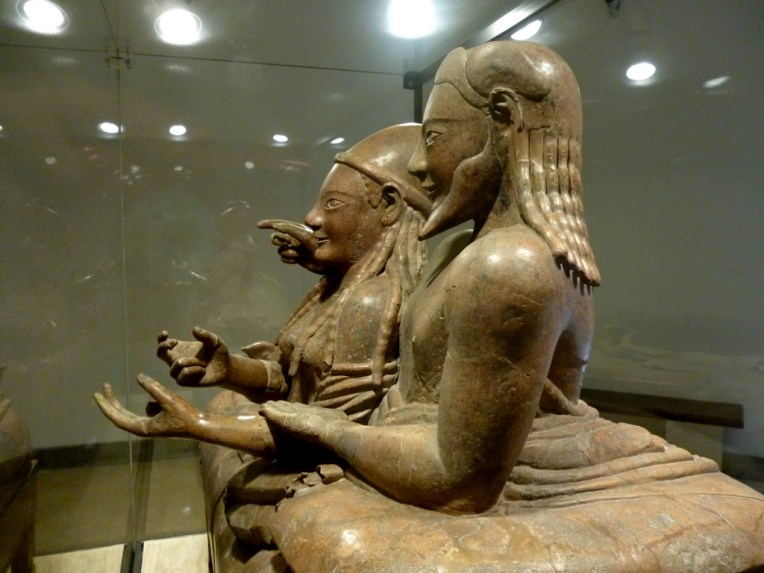
This is my image of true love: looking into the light of eternity, together.

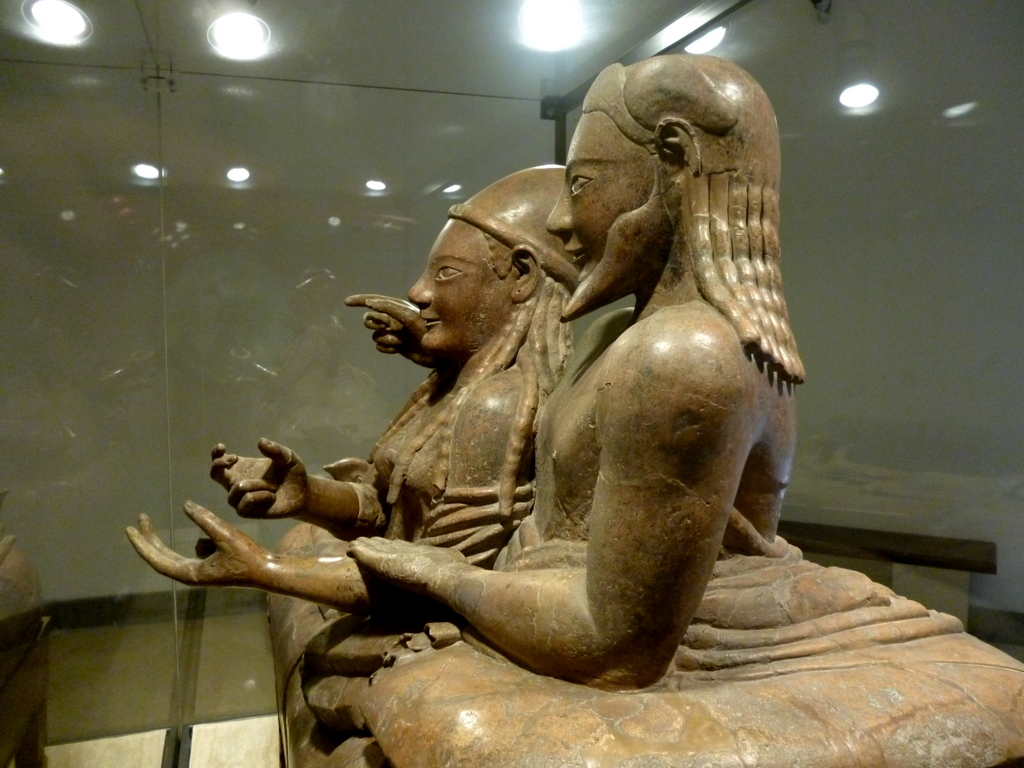
The Etruscan “Happy Couple in the Villa Giula museum  in Rome used to be painted and draped with fabric.  They had wine glasses and perfume bottles in hand and were reclining and eating at the same time– wonderful.  She had her earrings and jewelry on originally too.  This is the most famous of the tomb sculptures and is still incredibly moving for its feeling of affection and love. Not to mention the great “dos”, his and hers.
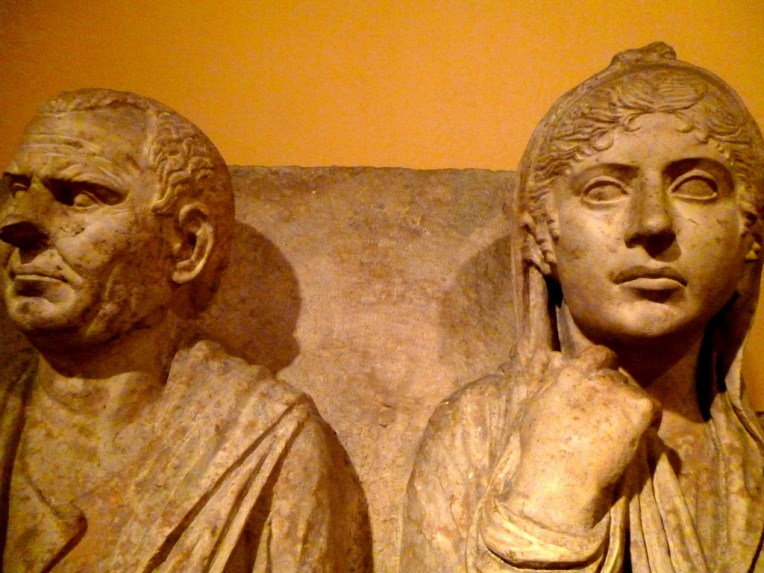
Then, the Romans invaded, and everyone started thinking about money, real estate, commerce.  Look at the new portrait of the married couple, Roman-style! Brood, worry, and scheme… not much trust there. And no more damn reclining in married portraits.
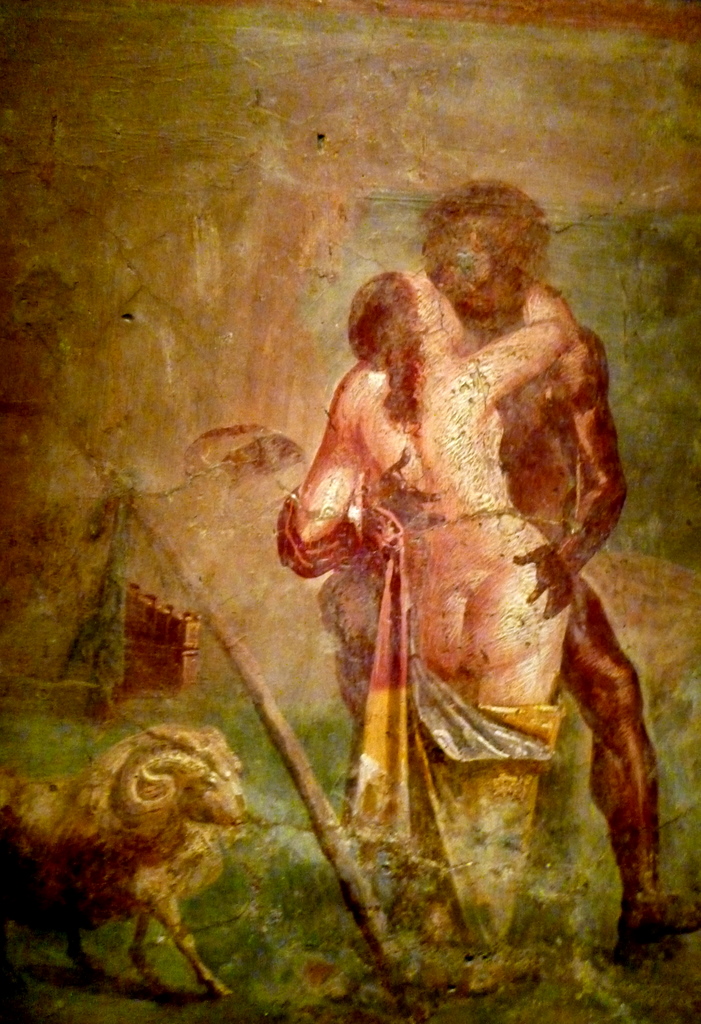
When not buying something or conquering someone,  in their spare time the Romans loved their soft and ahem, harder , images of sex.  This is a sweet one from the Secret Cabinet of Pompeii, a collection of erotic/ironic art  in the Naples Archeological Museum.  We did get in, though the guidebooks report this is often dicey.  It was deserted.  I think there’s a basic misunderstanding about what was erotic and what was common during the height of the Roman Empire.  Phallic-shaped signposts, lucky charms, and house decoration: common and boring.  Wall-painting series of  “menus” showing different sexual activities you could choose in the brothels, especially if you’re illiterate: interesting, erotic, naughty, not boring.  She’s light and he’s dark, showing the power of the guy, or something; this painting convention continued through the Renaissance and later in erotic scenarios. It’s Pan and his goat, but she seems happy.
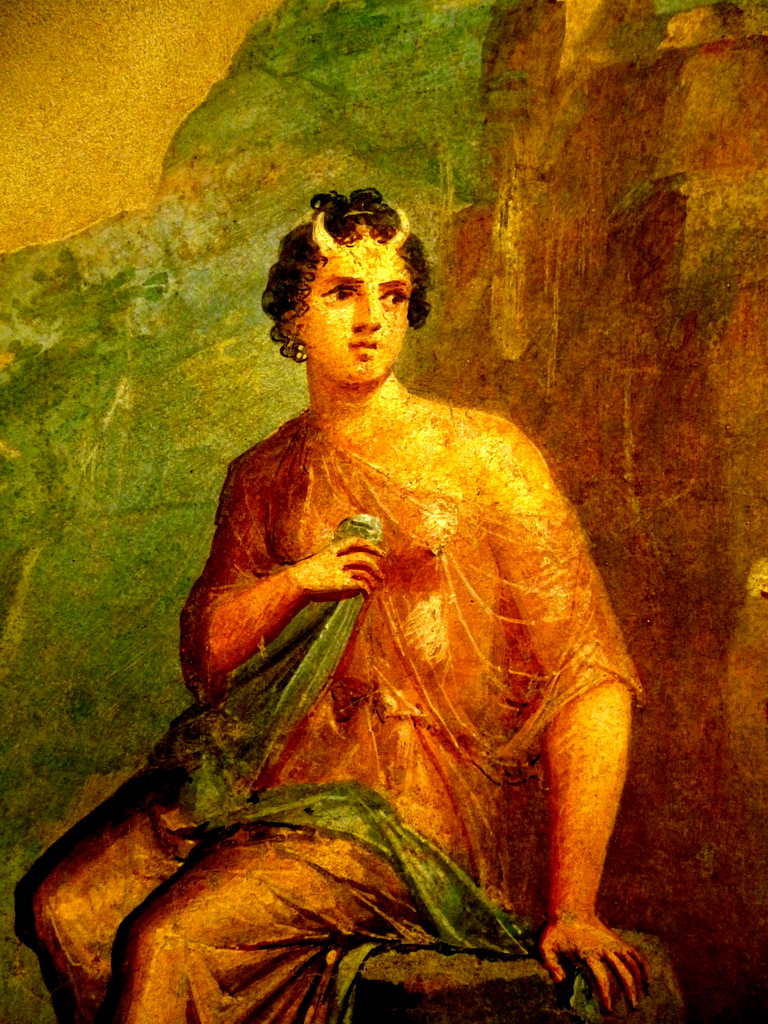
Girls with Horns!  What can I say?  You can check my Mythic notes at the bottom for more ideas.  Here’s an Egyptian version of girls with horns.  They seem to have water buffalo horns, an image seen still in Naples because of their wonderful water-buffalo mozzarella cheese.  You buy it from the deli, little balls swimming in a salty sea, and carry it home in a tied plastic bag like goldfish from the fair.  Mozarrella alone is a “secondi piatti”– main dish– in Naples.   It’s grilled a bit, served with bread, and that’s it.

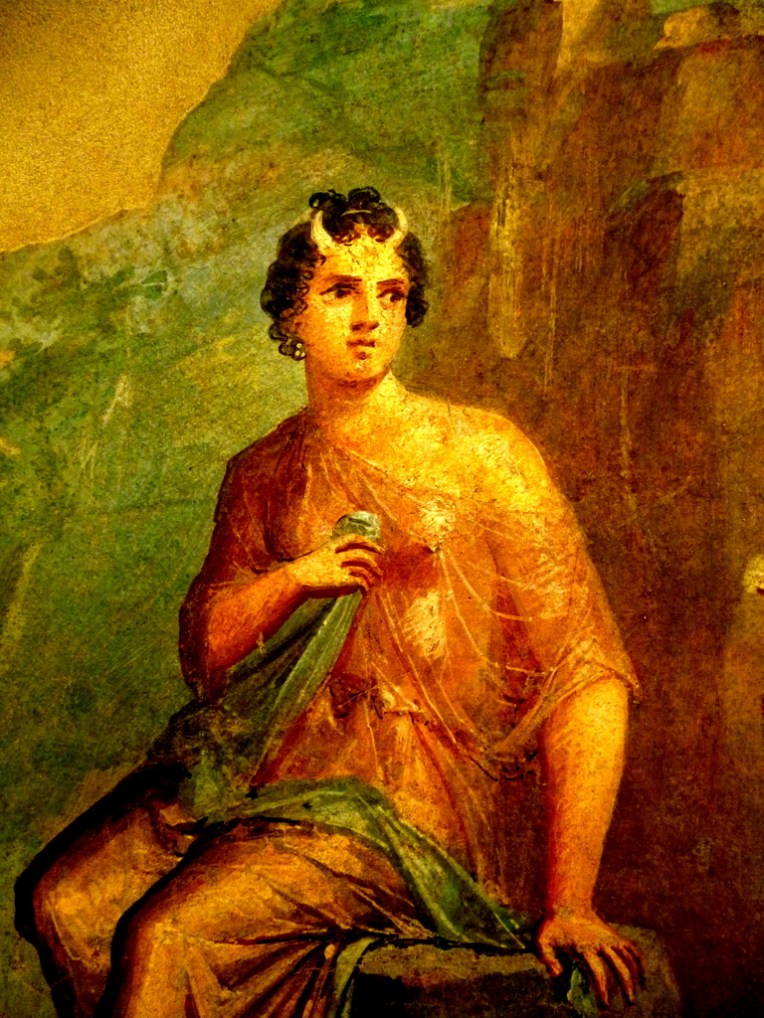
And now some Pompeiian paintings of girls with horns.  The “encaustic” they used included wax, but the paint actually used soap (lye-based) as the “caustic” medium binding the pigment  to bond with the walls.  These are not frescoes– the plaster was dry.  These are wet, slippery paint layers.  They then used the hot wax to seal the walls as a varnish on top, which they could buff to a high shine.  The first girl definitely has horns; the second may be more of a crescent moon, perhaps Diana.
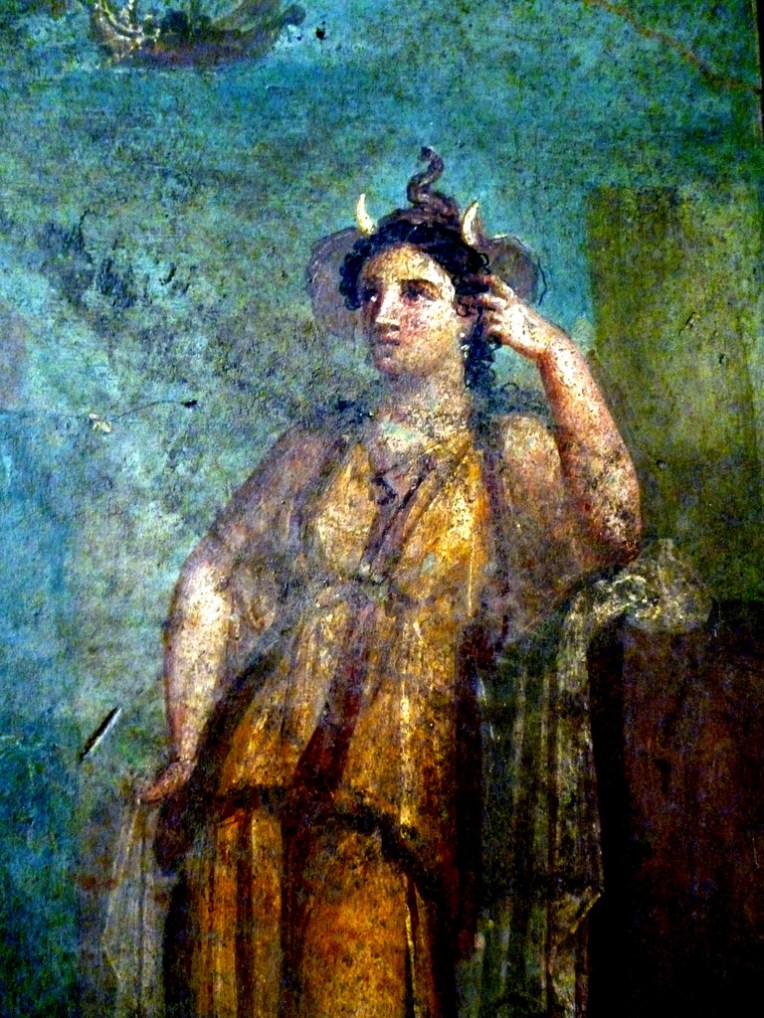
Horns or crescent moon?  What say you?

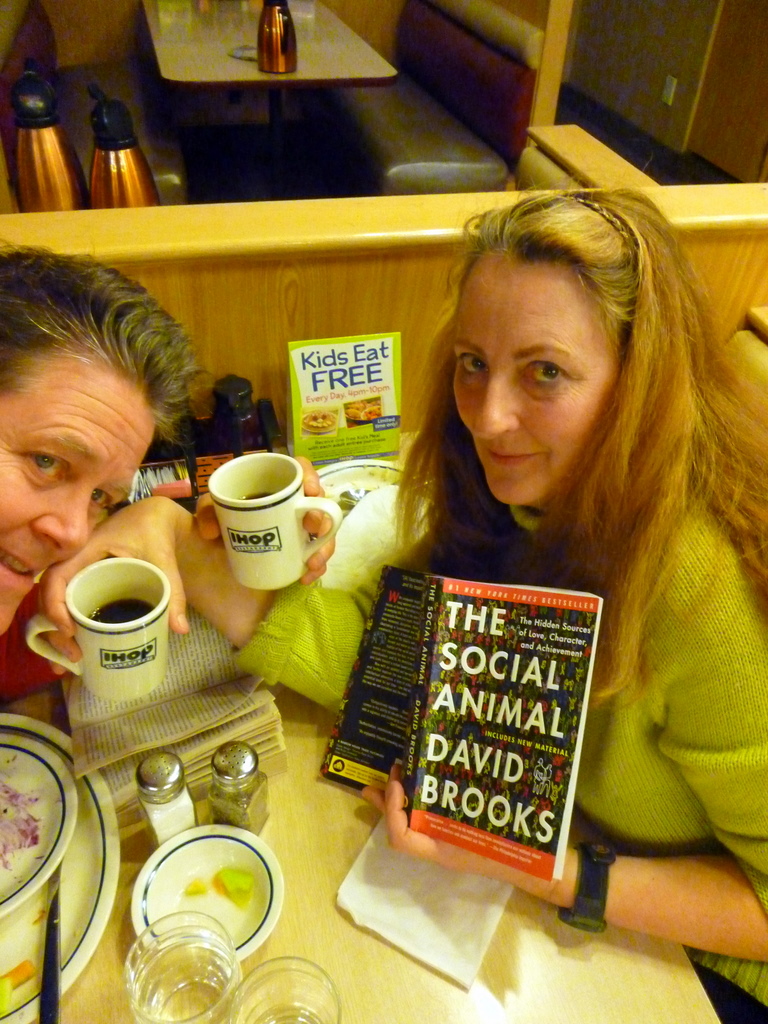
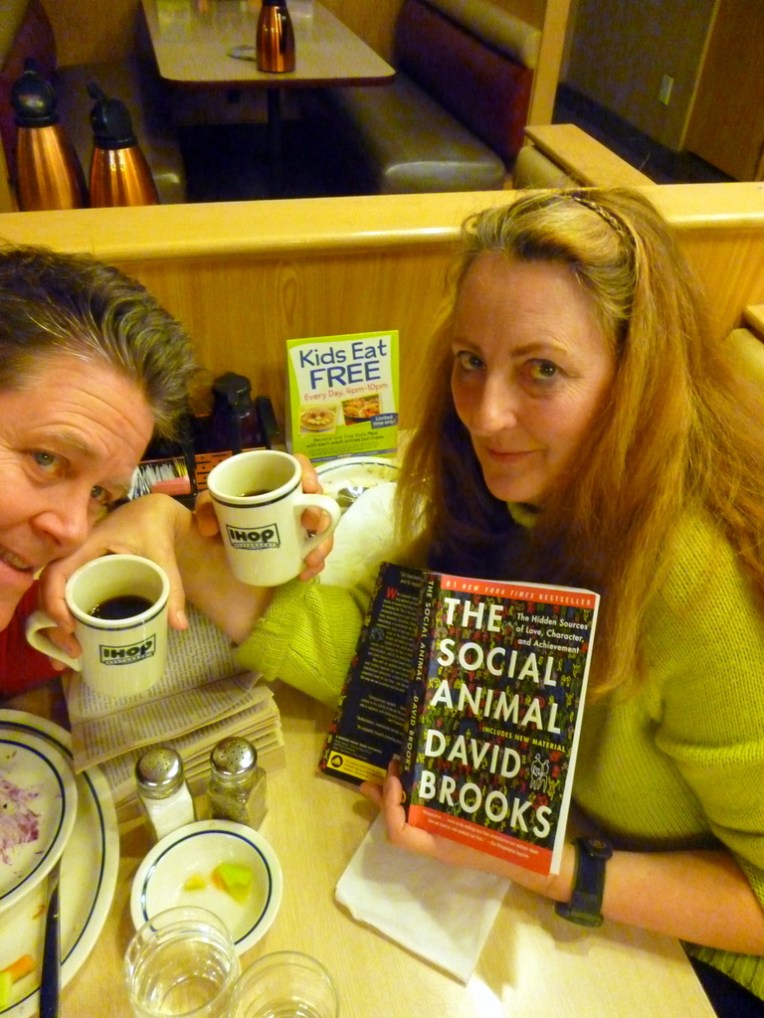
For the last happy couple, Scott and I, the morning after our arrival back, at the IHOP at 6AM.  We are not reclining and eating, like the Etruscan couple, but you see a soft upholstered booth, coffee, empty plates and cups, books, and happiness.  Good enough.
Mythic notes: I saw a lot of images of  Europa on the Zeus-Bull.  She was taken to swim on Zeus-Bull’s back through the Straits of Bosphorus– Bosphorus means ox-crossing– dividing Europe from Asia/Turkey–in other words, the Straits of Istanbul.  Europa and Io merge women with bull or cow, and then put them in water– a river or sea.  They might be a holdover from a more ancient cow -goddess, or metaphors for mass migrations and settlement of cattle people, but I just thought that the girls with horns were cool.  The Romans idealized the Nile as a source of fertility;  Roman matrons would buy vials of Nile water at the local Isis-temple  and douse themselves with it to increase conception.

Book notes:  The Social Animal by David Brooks was a great buy.  It’s trending sociological research, carried by his  made-up, somewhat borg-like characters named  Harold and Erica.  The characters provide a framework for reporting findings from everywhere.  Intriguing.  Many are saying that the creative/artistic mind is the big money earner in our new world. Well, let’s hope.  He lets Erica do art after she retires, and there are a few pages on the latest social research on music, painting, and other arts.   Recommended for a rousing non-fiction read and a juicy idea source.

Studio Notes:   I’ve done large paintings of both Europa and Io as abstractions.

My Marble Buddies: Hanging with Sculpture in Rome and Naples

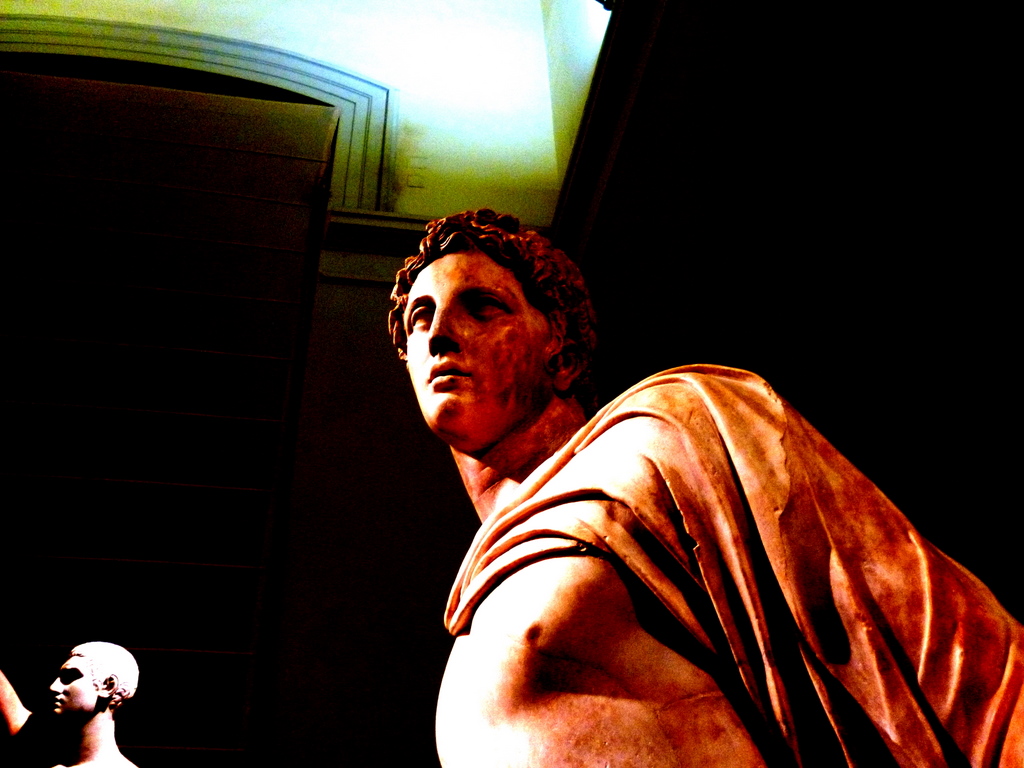
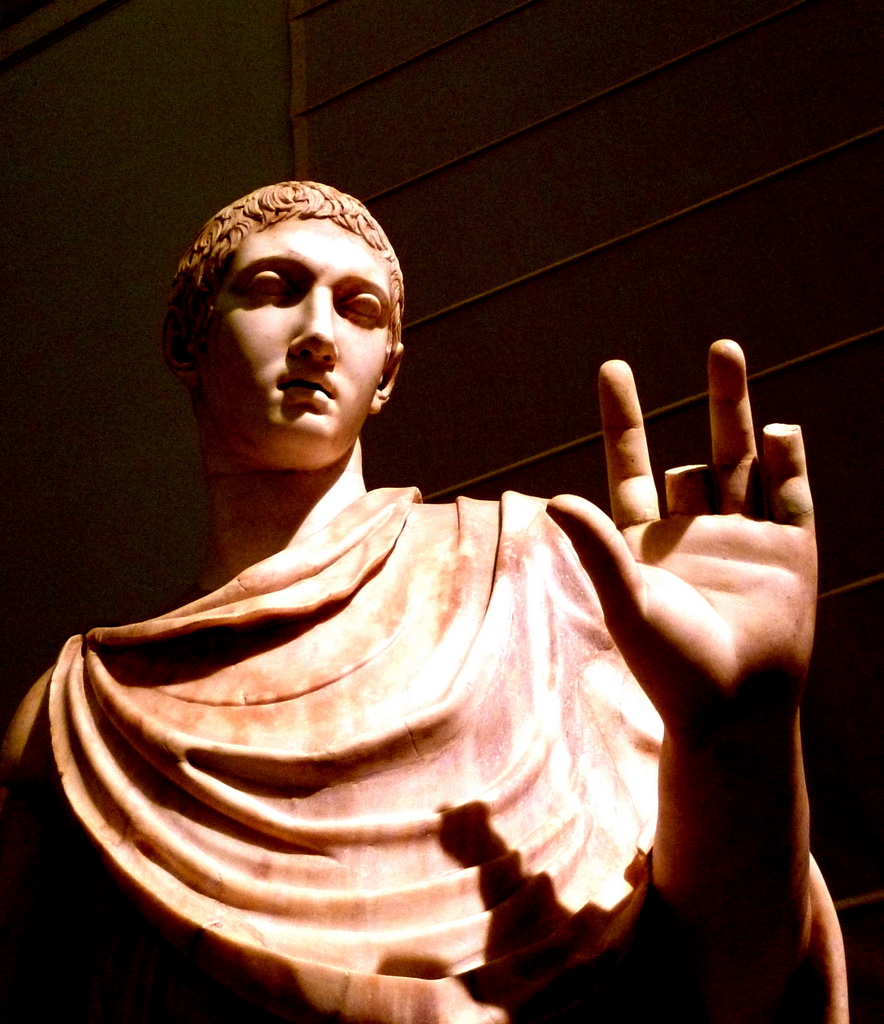
Three weeks in Italy! I felt like I was dipping my toe into a river of souls.  It was a time of borderlines and thresholds: old year to new,  marble to flesh, ancient streets filled with modern people, and classical beauty in the faces of people arguing, eating, buying stuff, driving Smartcars. The ancients seemed to live,  and the Christmas crowds of elegant Italians seemed temporary flickers haunting the alleys.  Meet some of my marble buds. 

The Capitoline Walls… this guy is great.  Is he a David figure?  To us he looked like he had 400 years of saying “Hey, Sailor” to his credit.   Cocky.  Just sayin’…


An achingly blue winter day, and I couldn’t tear myself away from the brilliant negative shapes against the stone. Youth and horse… stunning  contained force, and a tremendous face.  I like the entire Capitoline hill, and this museum piazza was designed by The Big Mike, Michaelangelo.

Capitoline Hill, sunset from the museum cafe terrace.  Murmurations of starlings, kinetic.  The whole Hill was formerly a nest of  state oracles and seers.  They liked the elevation so they could interpret flights of birds.  Nowadays the seagulls have invaded.   Oddly, they fly at night in the city, shrieks and white forms soaring in the darkness, a bit ghoulish.

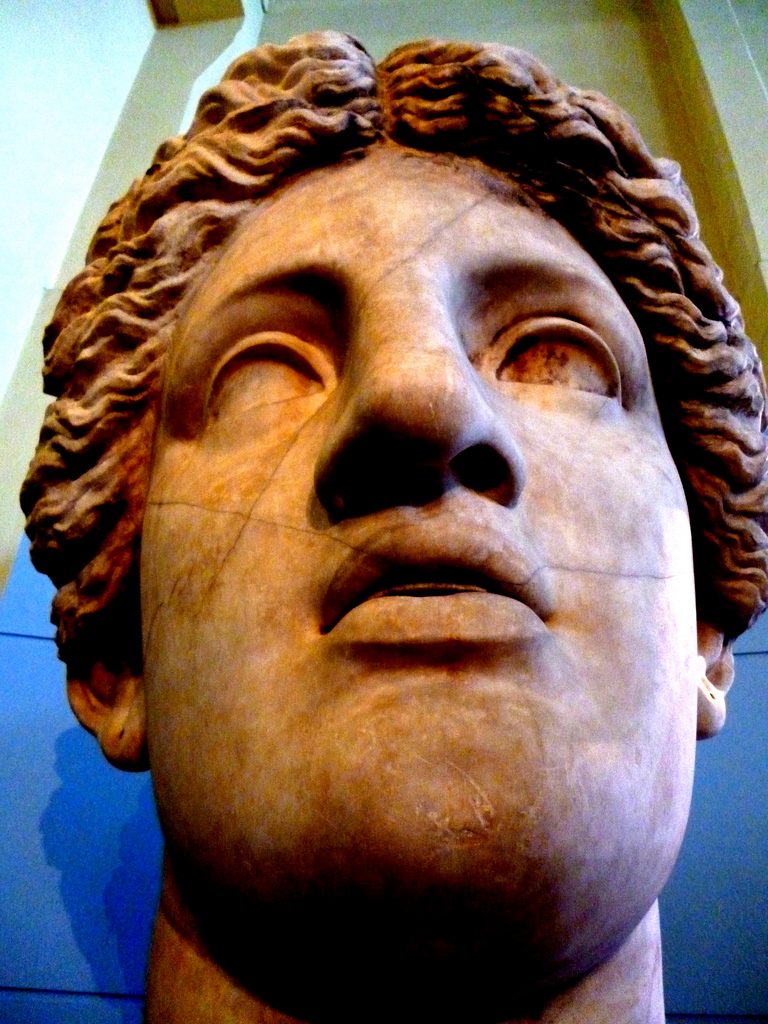
 Classical sculptures are virtually all knockoffs—copied from ancient Greek sources, now lost— or propaganda for the ruler du jour.  Some mighty bodies were made with removable heads so the next Caesar could just screw his own on.  The head of Constantine below is 5 feet high, so the whole sculpture, with pedestal and base, might have been 50 to 70 feet or more.   Statues of this mass can so easily verge on  Facist architechture.  But they impress.  Think of Lady Liberty!

What has that flawed eye perceived in its time? Think, too, of paint and decoration, fabrics and jewels originally draped around the sculpture.  The marble we see now is more a bone structure.  Ripped from their original colored and decorated context, they become evocative collage pieces.  But some still shine. I felt that it wouldn’t take long to develop a real relationship with them.  The more we like them, the more they come alive, like any so-called “object”, I suppose.  I’ll miss hanging with them.

Next: Happy Couples and Horned Gals: More Archaic Art Friends from Rome and Naples

‘Adorable Laura Hoffman: Wine Emporium, Power Tools, and Thursday Extravaganza Studio Party

Laura Hoffman is red wine, resin, power tools, prints and parties.  I have NEVER stopped by her studio without being welcomed and shown fabulous art and a great time.   I’m not sure how we met:   the Barracks and SOFA seem miles apart in more than distance.  How to characterize her distinct style? Monumental, fractured classical ladies in gender-bent attire, with a mythic twist?  The feminine archetype of all ages, tweaked?  Beamish frabjous Alices, like Lewis Carroll on oil paint fumes and Sonoma wine?

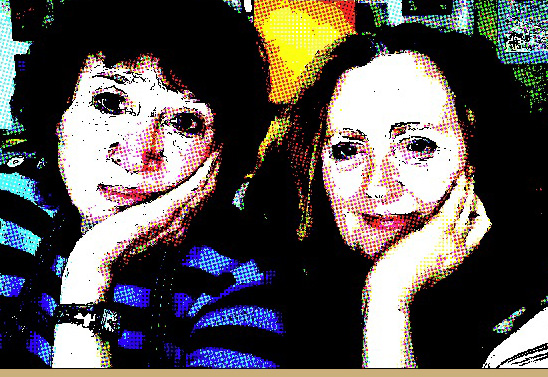
The Wine Emporium, source of viticulture  and visual delights, hosts wonderful art exhibitions.  Many thanks to James Haug and his exquiste palate (or is it palette?)  for both wine and art.  Laura’s show can be enjoyed, along with the Wine Emporium’s signature tastings, until early January.  If you haven’t been into the Wine Emporium in Sebastopol, you’ve missed James’ extensive knowledge, a stock of hard-to-find fine wines, and his open hospitality.  My slideshow below show’s Laura’s opening, and the Wine Emporium site hosts an online gallery of Laura’s work.  My show starts Labor Day 2012. Do drop by to taste the wine and see Laura’s ladies.
This slideshow requires JavaScript.

As for the power tools, well, you’ll have to ask Laura.  In January I’ll  be playing with her sanders in her studio.  We’ll be trying  interesting new techniques for collaging whole animals and people on to our surfaces!  Just kidding. Well, sort of.

Mythic News: Laura invites so much to play in her paintings.  The collage borders teem with action and embedded symbols. Look at the little stories embedded in the details: a swingset in a watermelon, ships, nuts, shells.  I particularly like her baroque little horizon lines which sprout more heiroglyphic narrative.  Take a look at the wonderful photo in the slideshow of an avalanche ofher collage sources:  they seem like the thoughts the ladies are thinking– coy, oracular, silly, or dreamy.The huge delicacy of the work  is, well, a delicious, huge delicacy.  Sweetmeats for the holiday indeed.  Fruits of flesh, seasoned with a saucy mind.  Pastries for the soul. Lauradorable.